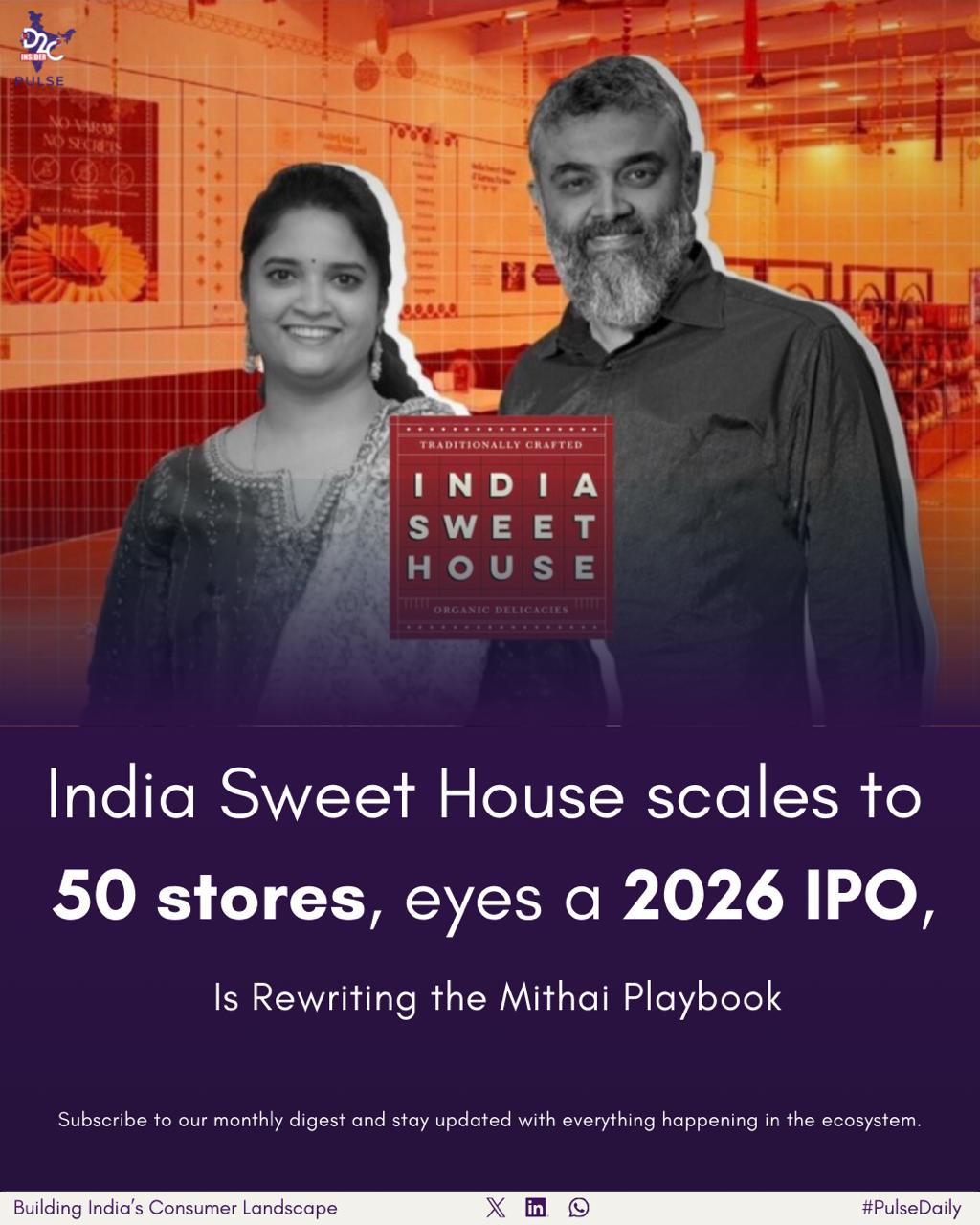
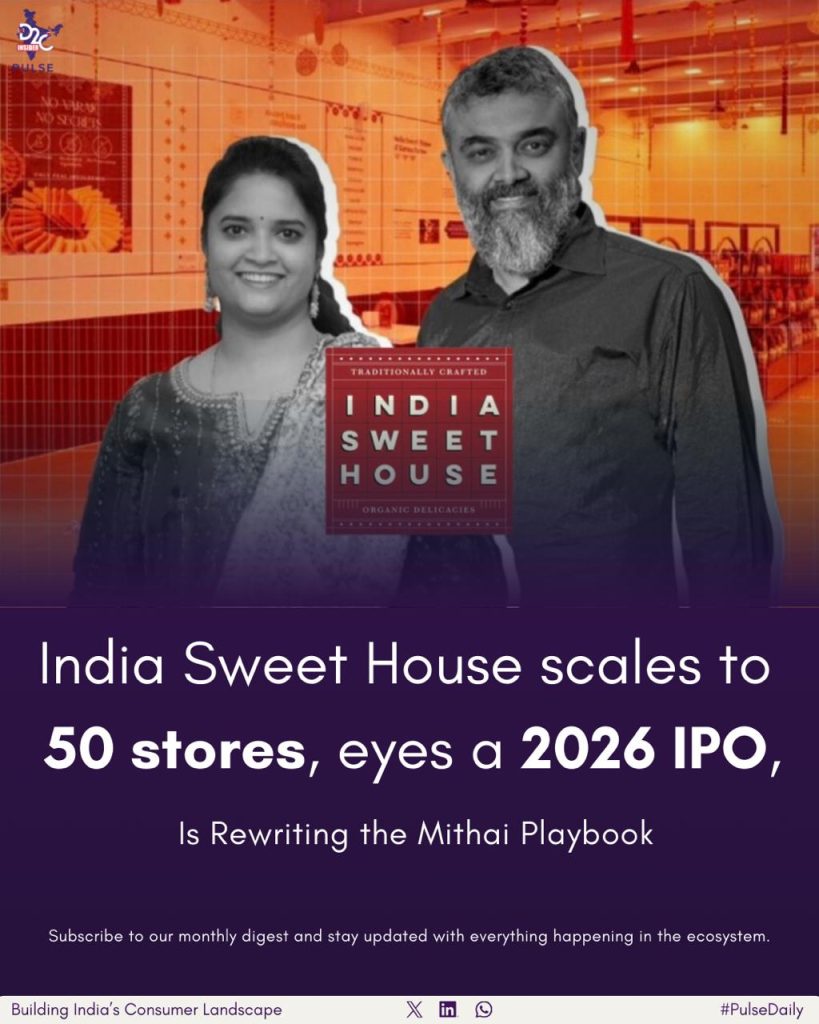
In a market known for its deep roots and local loyalty, India Sweet House (ISH) is becoming a standout D2C success story in India’s food scene. The Bengaluru-based sweets brand is experiencing close to 100% growth each year. It has expanded to 50 stores in just four years and reached ₹80.5 crore in revenue in FY25, up from ₹47 crore in FY24. ISH is now planning for a possible IPO in 2026, which is quite a feat for a mithai-focused brand in India’s D2C world.
Mithai has always been India’s go-to celebratory food, even before modern cafes became popular. Despite its cultural importance, the Indian sweets market has mostly been unorganized and hard to scale. ISH saw this chance and is developing a modern, customer-focused D2C brand that mixes traditional tastes with modern retail, tech, and a solid supply chain.
Shweta Rajshekar and Vishwanath Murthy started ISH from an organic farming business that supplied milk, paneer, and ghee through B2C and B2B channels. The COVID-19 pandemic changed things. With logistics causing issues for the milk business, they decided to concentrate on sweets, launching ISH as an online brand on platforms like BigBasket. By 2021, with an initial investment of ₹3 crore, ISH opened its first physical store in Bengaluru, shifting into a full-fledged D2C food and beverage brand.
It wasn’t going to be easy competing with established names like Anand Sweets, Kanti Sweets, and Haldiram’s. ISH set itself apart by focusing on natural ingredients, quick standardized growth, and a modern customer experience. ISH positioned itself between low-cost bakery chains and high-end mithai brands, creating a premium mass segment.
ISH stores are designed to make people want to stay longer, combining sweets with fresh chaat, savory items, seating, and visible preparation areas. While sweets are still the main focus, items like savory snacks, millet-based cookies, and chaats help attract new customers and encourage repeat purchases. Prices are still reasonable, with mithai like rasagullas and gulab jamuns at ₹40 each, while premium barfis range from ₹680 to ₹1,600 per kg, without artificial colors.
Today, ISH employs over 900 people and runs a central production facility in Bengaluru. Its system is fully tech-enabled, tracking everything to maintain a strong supply chain. The brand gets milk from local farmers who follow ethical practices, paying them above government rates, and is creating a supplier certification system to ensure quality as it grows.
ISH now operates across Karnataka, sells through quick commerce platforms like Swiggy and Zomato, and has a 70:30 offline-to-online revenue split. Popular items like Mysore Pak and motichur laddus sell almost 500 kg each per day. With the Indian sweets market predicted to grow, ISH’s timing lines up well with D2C expansion plans.
As it looks to expand into neighboring states, focus on Gen Z innovation, and improve its governance before a 2026 IPO, India Sweet House is showing that even traditional markets can be transformed through modern D2C practices.