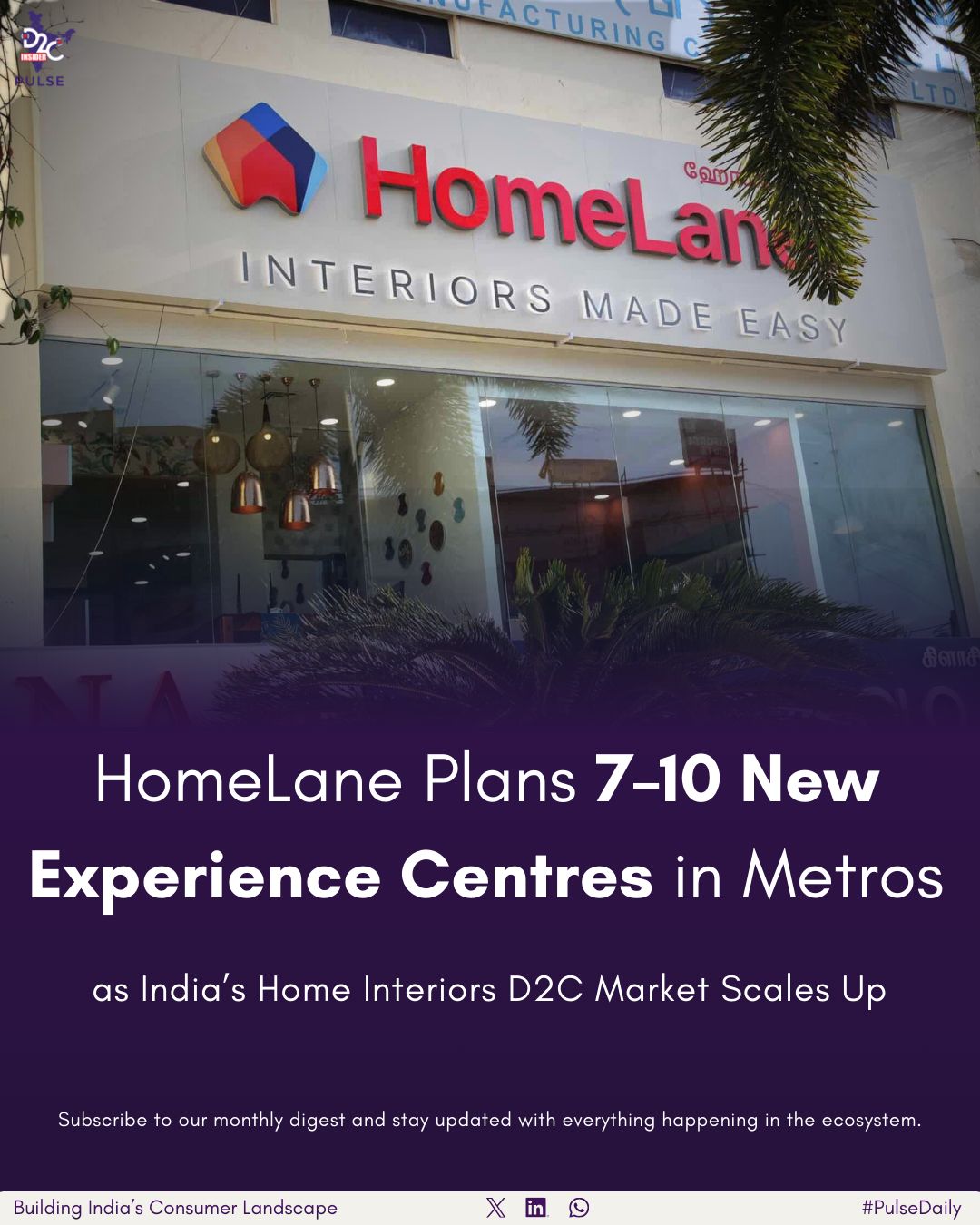
India’s direct-to-consumer (D2C) market is quickly moving past just products, and HomeLane is a great example. With home sales increasing across India, HomeLane plans to open 7–10 new experience centers in major cities in the next 6–8 months. This will help them stay at the top of the home interiors market in India.
HomeLane, founded a decade ago, entered a market where homeowners often had to deal with unreliable workers, unclear costs, delays, and inconsistent work. HomeLane’s idea was simple: buying a home is hard enough, so setting it up shouldn’t be. Now, HomeLane has worked on about 55,000 homes in 40 cities, has around 90 experience centers, and has one of the largest platforms for interior design and execution in India.
HomeLane’s success comes from its focus on making things predictable. They made the market more organized by offering set schedules, clear costs, and quality promises. They offer a 45-day delivery or rent , manage cost overruns, and take responsibility for the entire process. This has helped them gain customer trust in a market where people typically spend ₹8–15 lakh per project.
Technology has been key to HomeLane’s growth. Their platform, SpaceCraft, brings together design, pricing, and production into one system. Designers can create 3D designs in real time, get prices instantly, and connect designs directly to manufacturing. This tech-driven D2C model has helped HomeLane grow faster and reduce project risks, which was very important during the pandemic when they moved to online design meetings.
Physical stores are still a key part of HomeLane’s plan. Even though about 70% of leads start online, every customer still visits a store at least once. This the need to see and feel products in the D2C market. The planned expansion in major cities like MMR and NCR will help build the brand in high-demand areas and make it easier for customers to access and convert.
Besides major cities, HomeLane is also growing in Tier I, II, and III cities. Eastern India is a strong market, with cities like Kolkata, Ranchi, and Patna showing high interest in organized interiors. HomeLane is using a franchise model to grow faster, with both franchisee-owned company-operated (FOCO) stores in big cities and franchisee-owned franchisee-operated (FOFO) stores in smaller towns. They plan to increase the number of FOFO studios from about 20 to almost 200 in the next three years, reaching more areas in India.
HomeLane is in a good financial position. They finished FY24 with ₹756 crore in revenue, a 22% increase from the previous year, and had their first profitable quarter in Q4 FY24. The management expects HomeLane and Design Café to be profitable for the full year, with a goal of 20–30% annual growth in the next few years.
Because only about 15% of India’s interiors market is organized, there is a big opportunity for growth. With careful expansion, strong finances, and a tech-driven D2C approach, HomeLane is in a good position to benefit from more home ownership and customer demand for reliable interior solutions. The upcoming expansion of experience centers shows their goal to lead India’s D2C market in home and lifestyle .