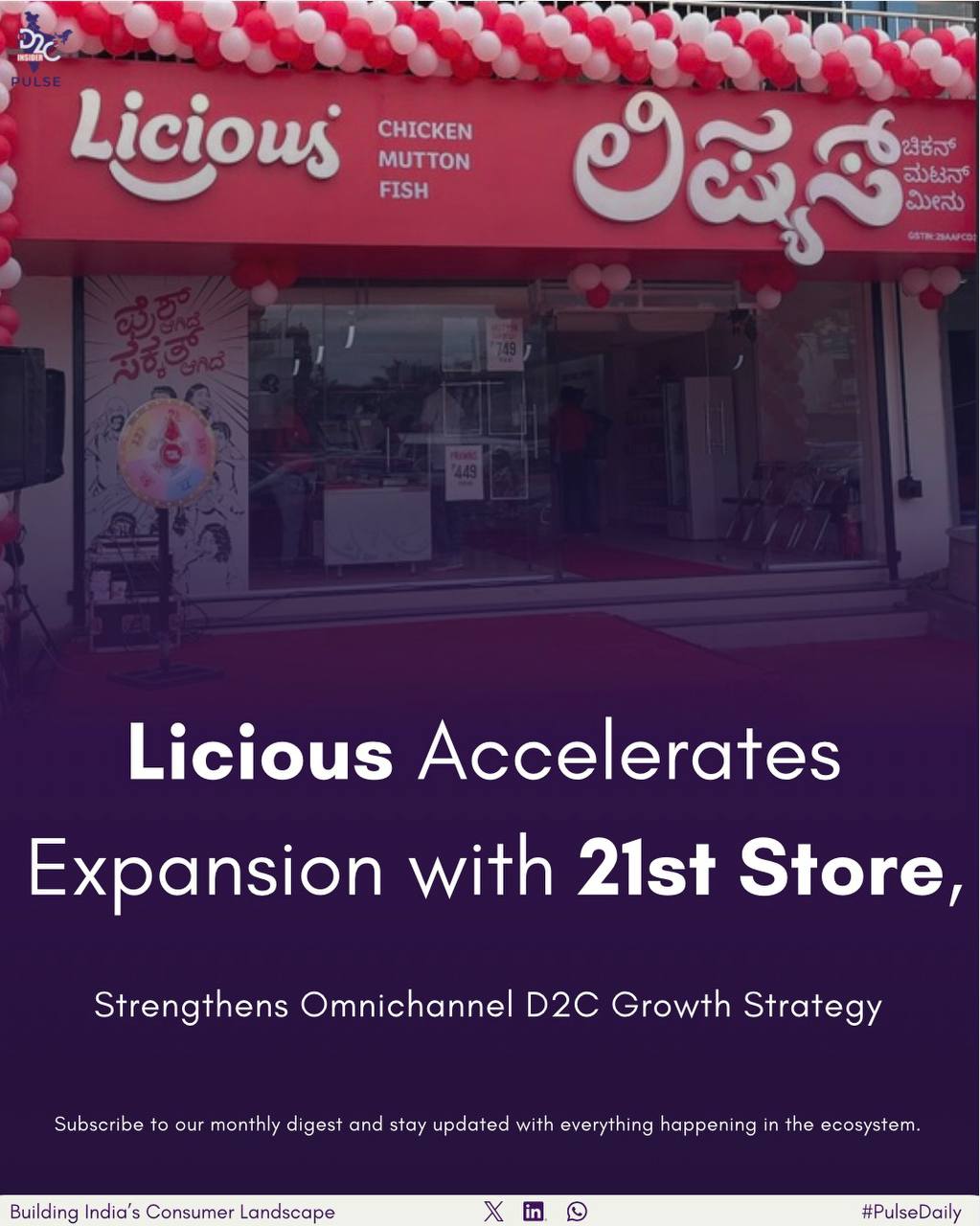
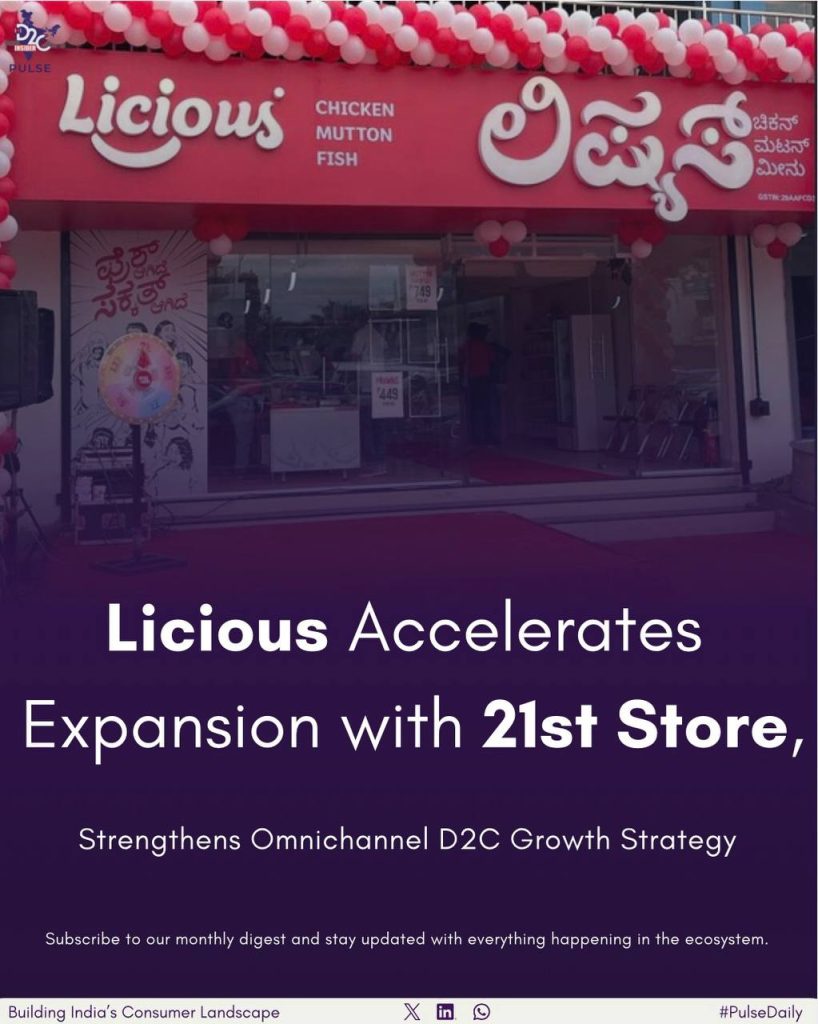
India’s direct-to-consumer ecosystem continues to mature as leading brands deepen their offline presence alongside digital scale, and Licious is emerging as one of the strongest examples of this evolution. The meat and seafood retail startup has expanded its footprint in Bengaluru with the launch of its 21st physical store in Mallathalli, taking its total store count to 28 outlets across India. The milestone reinforces Licious’ long-term ambition to build a large, trusted, and scalable omnichannel D2C business in India.
Founded as a digital-first player, Licious began its journey as a direct-to-consumer India brand focused on online delivery of fresh, never-frozen meat and seafood. Over the years, the brand has built strong recall around quality, hygiene, and reliability—critical differentiators in the D2C food and beverage brands category. As consumer behaviour evolved, Licious recognised that sustained growth in the D2C ecosystem India would require a stronger physical presence to complement its online channels.
Bengaluru has played a central role in this strategy. As one of India’s most digitally mature cities with a high density of urban consumers, the city offers a powerful testbed for omnichannel D2C strategy. With 21 stores now operational, Licious has built dense neighbourhood-level coverage that improves accessibility, speeds up fulfilment, and strengthens trust through in-person product visibility. Offline stores enable customers to experience freshness firsthand, reinforcing brand credibility while driving repeat purchase behaviour—an increasingly important lever for D2C brands India scaling beyond early adopters.
The expansion also allows Licious to tap into new customer segments. While the brand initially catered to digitally native consumers through its app and website, physical retail opens doors to households that prefer walk-in purchases or hybrid shopping journeys. This blended model reflects broader D2C market trends 2025, where brands are no longer choosing between online and offline but deliberately investing in both to maximise reach and lifetime value.
A key catalyst in Licious’ offline acceleration was its acquisition of My Chicken and More in 2024. The acquisition helped Licious rapidly scale its physical footprint while leveraging an existing local supply chain and customer base. Such D2C acquisitions 2025 highlight how consumer startups are using inorganic growth to fast-track expansion in categories where proximity and trust matter deeply.
Beyond Bengaluru, Licious has steadily expanded across major Tier I markets including Delhi NCR, Mumbai, Chennai, Hyderabad, Pune, and Chandigarh. Looking ahead, the company has outlined an ambitious roadmap to scale to 500 offline stores across key markets in the coming years, with a strong focus on Tier I and Tier II cities. This expansion plan positions Licious among the fastest-growing D2C brands scaling in 2025 within the Indian D2C updates landscape.
To support this next phase of growth, Licious has also strengthened its leadership team. In April 2025, the company appointed Gaurav Mathur as Chief Technology Officer, following the exit of Ajit Narayanan. The leadership transition underscores the brand’s continued focus on technology-led supply chain efficiency, data-driven inventory management, and seamless integration between online and offline channels—critical enablers for scaling an omnichannel D2C business India.
Within the broader D2C industry news cycle, Licious’ latest Bengaluru store launch highlights a clear shift underway: growth for mature D2C startups is now being driven by disciplined expansion, physical presence, and deeper consumer trust. As the brand continues to invest in both digital and retail infrastructure, Licious is steadily building a scalable blueprint for the future of direct-to-consumer food brands in India.