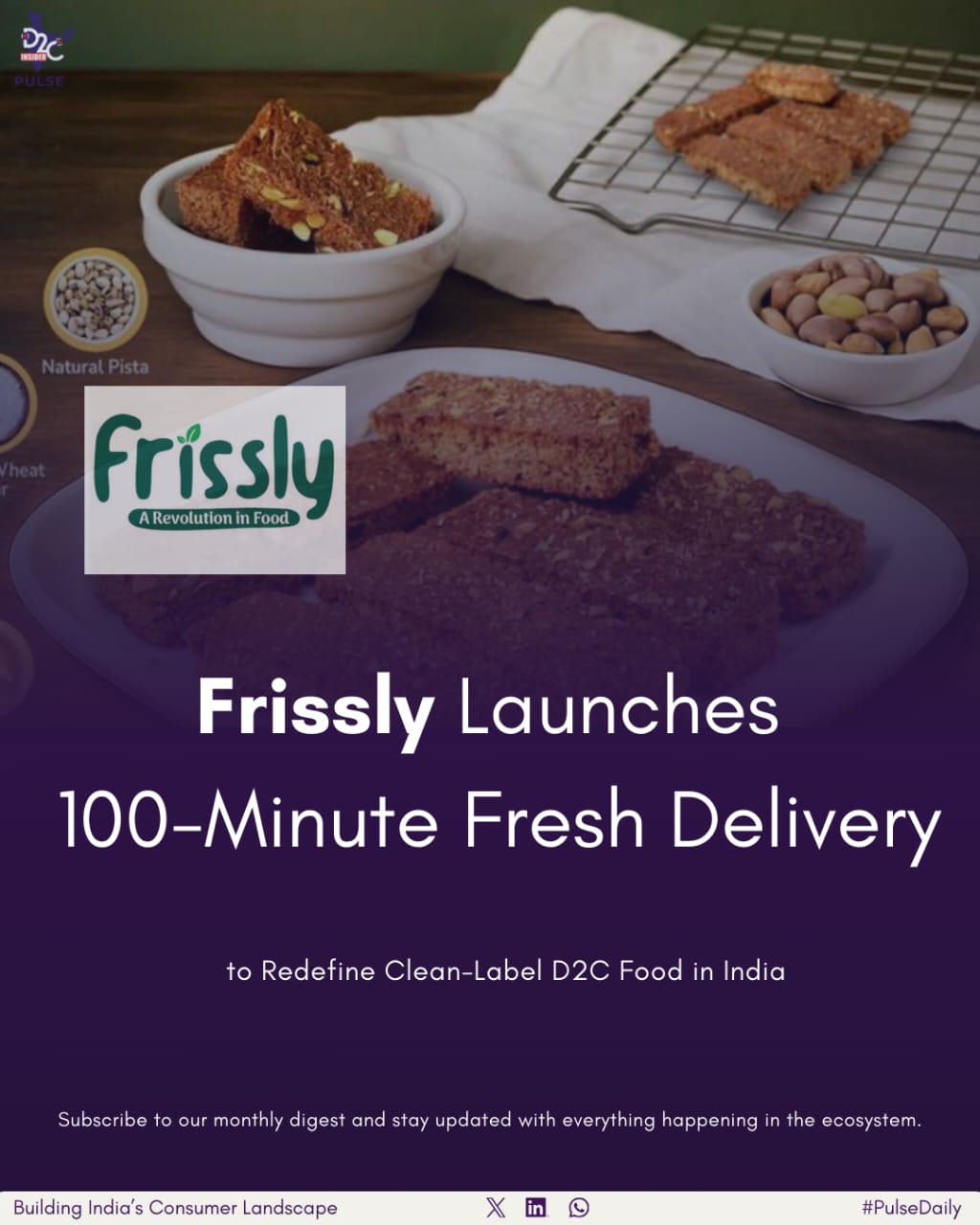
India’s D2C food and beverage landscape is evolving rapidly as consumers demand greater transparency, freshness, and nutritional integrity. Adding to the latest D2C news India, Hyderabad-based clean-label food brand Frissly has launched a 100-minute fresh delivery model, positioning freshness and trust as core differentiators in India’s fast-growing direct-to-consumer food ecosystem.
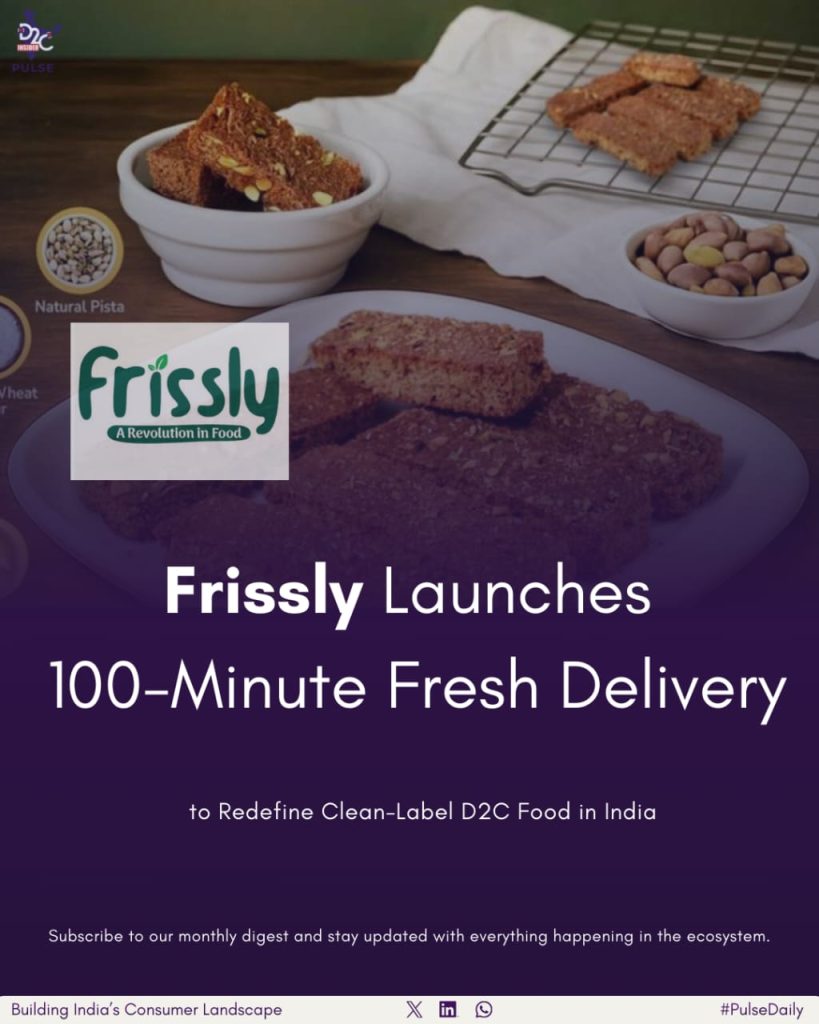
Frissly’s new 100-minute delivery promise is designed to ensure that customers receive freshly prepared food rather than products manufactured in bulk and stored for extended periods. At a time when Indian D2C updates increasingly reflect consumer pushback against ultra-processed foods, the brand’s small-batch, rapid-delivery model aligns with rising demand for traceability, hygiene, and ingredient transparency. This move places Frissly firmly within the conversation around D2C business India models that prioritise quality over scale-at-any-cost.
Operating in the clean-label and organic segment, Frissly offers products made using certified organic and non-GMO ingredients. Its sourcing philosophy centres on whole grains, millets, red rice, and cold-pressed oils, alongside natural sweeteners such as jaggery, honey, palm jaggery, coconut sugar, and candy sugar. The brand explicitly avoids refined flour, refined sugar, refined oils, preservatives, artificial colours, emulsifiers, and synthetic additives—standards that resonate strongly with families seeking healthier alternatives within India’s D2C ecosystem.
According to founder Pratap Varma, speed alone is not the objective. “Our focus has always been on building food that families can trust. Fast delivery alone doesn’t mean anything if the food isn’t honest. Our 100-minute promise is about delivering freshness with integrity—food made under strict standards, with full transparency on when it was prepared and how it was handled,” he said. This philosophy underscores Frissly’s broader brand-building story, where trust, childhood nutrition, and consistency take precedence over aggressive mass manufacturing.
Unlike conventional packaged food players, Frissly relies on small-batch production to maintain quality control and freshness. This approach allows the brand to closely monitor sourcing, processing, and handling, a key advantage as D2C consumer behavior India shifts toward scrutiny of ingredient lists and preparation timelines. In a packaged food market dominated by shelf-life optimisation, Frissly’s model represents a meaningful departure and a strong example of innovation within latest D2C startups.
Taste and texture have also been central to product development. While clean-label brands are often perceived as compromising on flavour, Frissly blends traditional cooking methods with modern food science to deliver familiar, enjoyable taste profiles—without artificial enhancers. This balance is especially relevant for younger consumers and households aiming to preserve traditional eating habits while embracing modern, ready-to-cook formats.
As part of its expansion plans, Frissly intends to scale the 100-minute delivery service beyond Hyderabad into Telangana, Karnataka, Tamil Nadu, Maharashtra, and Andhra Pradesh. The brand is investing in logistics, sourcing infrastructure, and packaging solutions that preserve freshness while reducing environmental impact, aligning with sustainability-led D2C market trends 2025.
The launch reflects a broader shift in D2C industry news, where rapid delivery is no longer just about convenience but about preserving product integrity. As India’s clean-label and organic food segment becomes more competitive, models that combine speed, transparency, and nutritional credibility are emerging as key differentiators. With its 100-minute fresh delivery initiative, Frissly is positioning itself as a trust-led, growth-oriented player in India’s evolving D2C food ecosystem, setting the stage for scalable, quality-driven expansion.