
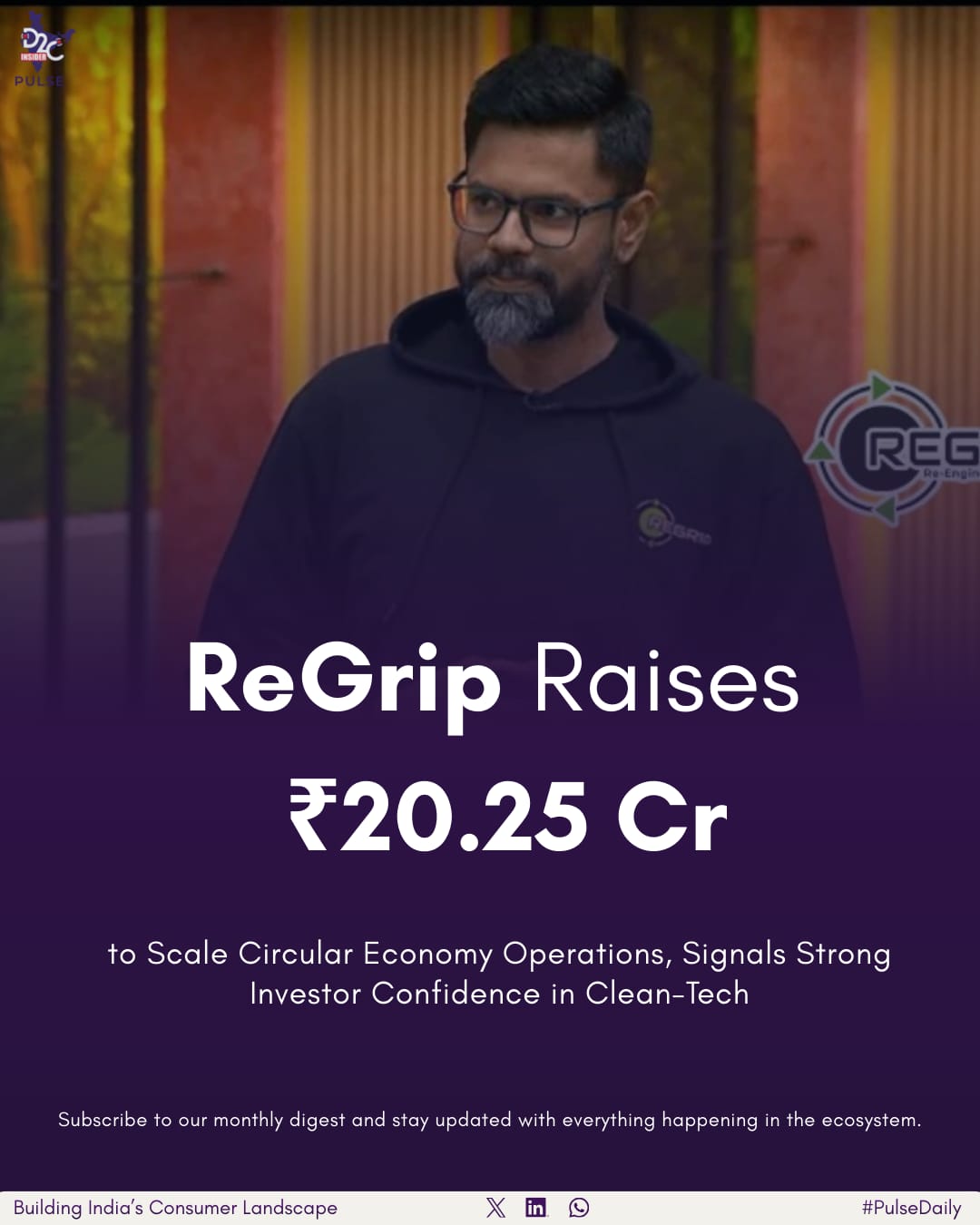
ReGrip, a company focused on recycling tires and promoting a circular economy, just got a big boost, raising ₹20.25 crore. This investment, which was called the biggest deal of its kind recently, shows that investors are really seeing the potential in sustainable businesses that can fix big problems in India.
The funding includes a mix of investments and loans. They raised ₹15.25 crore through investments, giving investors a 13.2% stake in the company, and ₹5 crore as a loan. Red Bricks Capital Partners put in the most money at ₹8.9 crore, with Auxano Capital following at ₹2.5 crore. Other investors also joined in, including Ankur Mittal and A. Velumani.
Tushar Suhalka started ReGrip to tackle the huge problem of discarded tires in India. Every year, millions of tires are thrown away, which causes harm to the environment and people’s health. ReGrip has created a system that figures out if old tires can be reused, fixed up, or recycled, getting the most out of them while reducing waste.
Tires that are still in good shape are fixed and sold for almost half the price of brand new ones. These tires often still have up to 80% of their life left, making them an affordable option for businesses and supporting India’s move toward reusing materials. Tires that can’t be reused are turned into crumb rubber, which is used in different industries like cars, construction, and even shoes, making these industries more sustainable.
ReGrip has also branched out into energy by making fuel and oil from tires, providing other fuel choices for industries. This puts the company in a good spot, dealing with recycling, clean energy, and reducing pollution, which is drawing in investors who care about the climate.
ReGrip has grown a lot, with operations in 24 places and working with over 400 scrap dealers. They’re known as the biggest tire waste collector in India and have the biggest licence to run a plant that turns tire waste into fuel, giving them an advantage in the industry. This makes ReGrip a key player in India’s growing D2C scene and the wider push for sustainability.
The new money will go towards growing their processing abilities, improving their tech, strengthening their network of suppliers, and expanding to new areas. As India pays closer attention to environmental rules and recycling, companies like ReGrip are becoming important partners for manufacturers and logistics companies.
Even though ReGrip doesn’t sell directly to consumers, it still has a big impact by enabling cleaner supply chains and cost-effective reuse, which benefits consumers in the long run. The company’s growth reflects a trend in India, where sustainability and recycling are becoming central to how businesses operate.
With solid financial backing and a large market, ReGrip is in a good spot to become a leader in clean technology, showing how Indian startups can create successful businesses while tackling important environmental issues.