
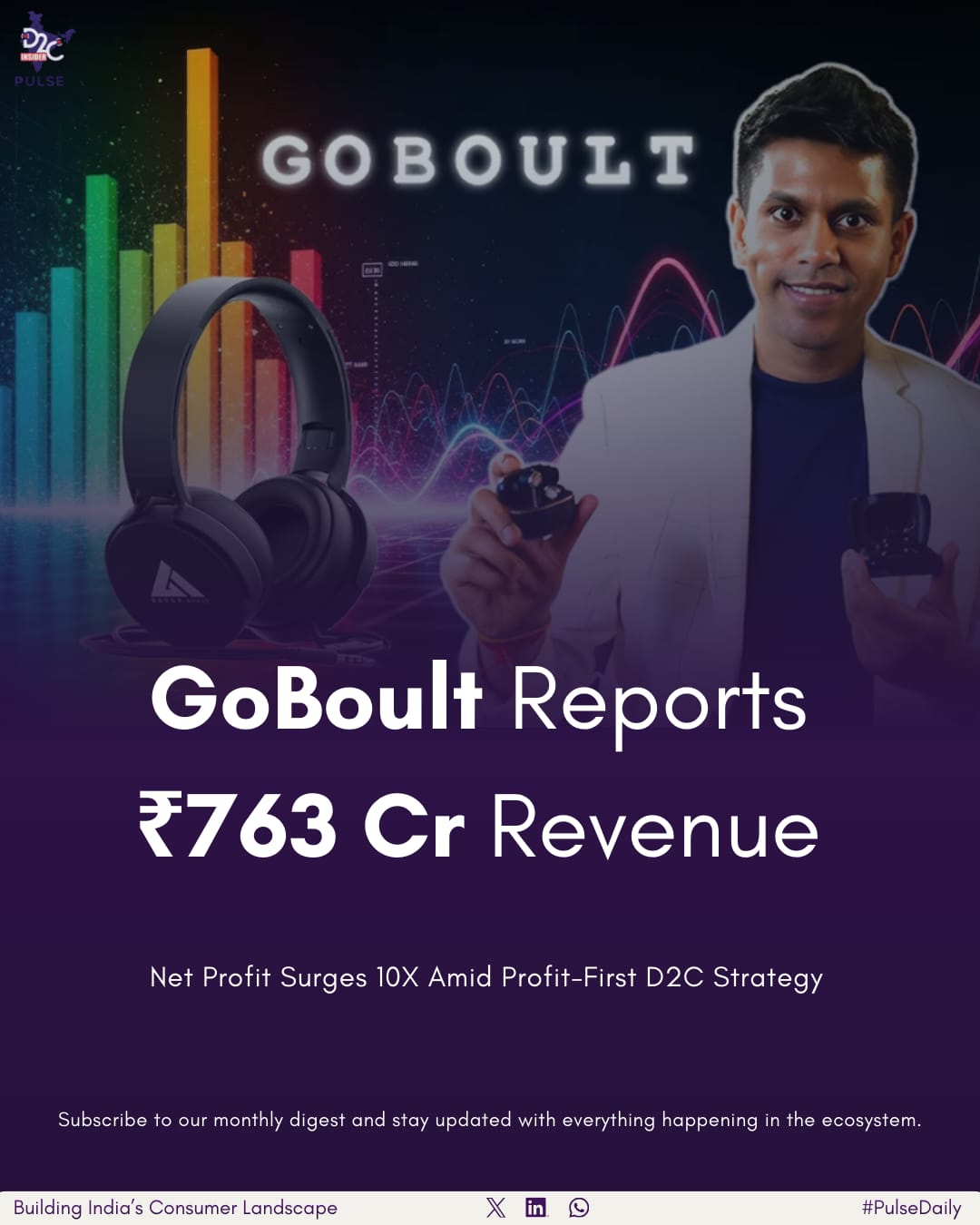
GoBoult Audio has announced steady growth and a big jump in profits for FY25, showing a change in the direct-to-consumer (D2C) scene in India. The homegrown electronics and gadget brand made ₹763 crore in revenue, which is up 10% from ₹697 crore in FY24. This happened even though the wearables market isn’t growing as fast as it used to.
According to financial records, this 10% revenue increase might seem normal compared to the big jump in FY24. But, in today’s market, getting double-digit growth is something special. While some other D2C brands in India haven’t grown or have even shrunk, GoBoult’s success shows they’re scaling up their D2C business in a careful way.
GoBoult Audio was started in 2017. They design and sell wireless earbuds, headphones, smartwatches, and speakers. They’ve become one of the quickly growing D2C brands for consumer electronics. They only make money from product sales, which shows they’re focused on having their own products and using their brand for distribution.
The cost of materials, all of which are imported, makes up 53% of their total costs. This expense went down by 2.7% to ₹391 crore in FY25 from ₹402 crore in FY24. Employee expenses went up by 29.6% to ₹35 crore, and advertising costs went up by 9.3% to ₹177 crore. After discounts, shipping, rent, legal fees, and other expenses, their total spending was ₹731 crore in FY25.
Even though their revenue only grew a bit, they controlled costs better, which really helped their profits. GoBoult’s net profit jumped almost 10 times to ₹24 crore in FY25 from ₹2.5 crore in FY24. Their EBITDA margin was 6.6%, and they spent ₹0.96 to make one rupee in FY25, which shows they’ve gotten much better at running things and have come up with new ideas for their D2C supply chain.
What’s cool is that GoBoult hasn’t received any funding. Most other D2C brands get money from venture capitalists, but GoBoult has grown without it. Competitors like boAt had flat revenue of ₹3,073 crore in FY24 with ₹60.4 crore profit, and Noise’s revenue dropped 24% to ₹1,048 crore with ₹3.2 crore profit. GoBoult’s numbers show they’re focused on making a profit first.
This fits with what’s happening in the D2C market in 2025, where brands are focusing on steady growth instead of just trying to expand as fast as possible. The time when D2C funding and high startup values were all that mattered is changing. Now, it’s more important to have good unit economics, protect margins, and have careful plans for D2C expansion.
If you’re keeping up with the D2C industry in India, GoBoult’s FY25 results show an important shift. In areas like electronics and gadgets, fashion, beauty, and food and beverages, the main goal isn’t just to grow the fastest, but to become profitable for the long term.
As the D2C market in India gets more developed, GoBoult’s story is a good example. Even in a market where most D2C brands have funding or celebrity backing, managing things well and controlling costs can lead to real revenue growth and create value over time.