
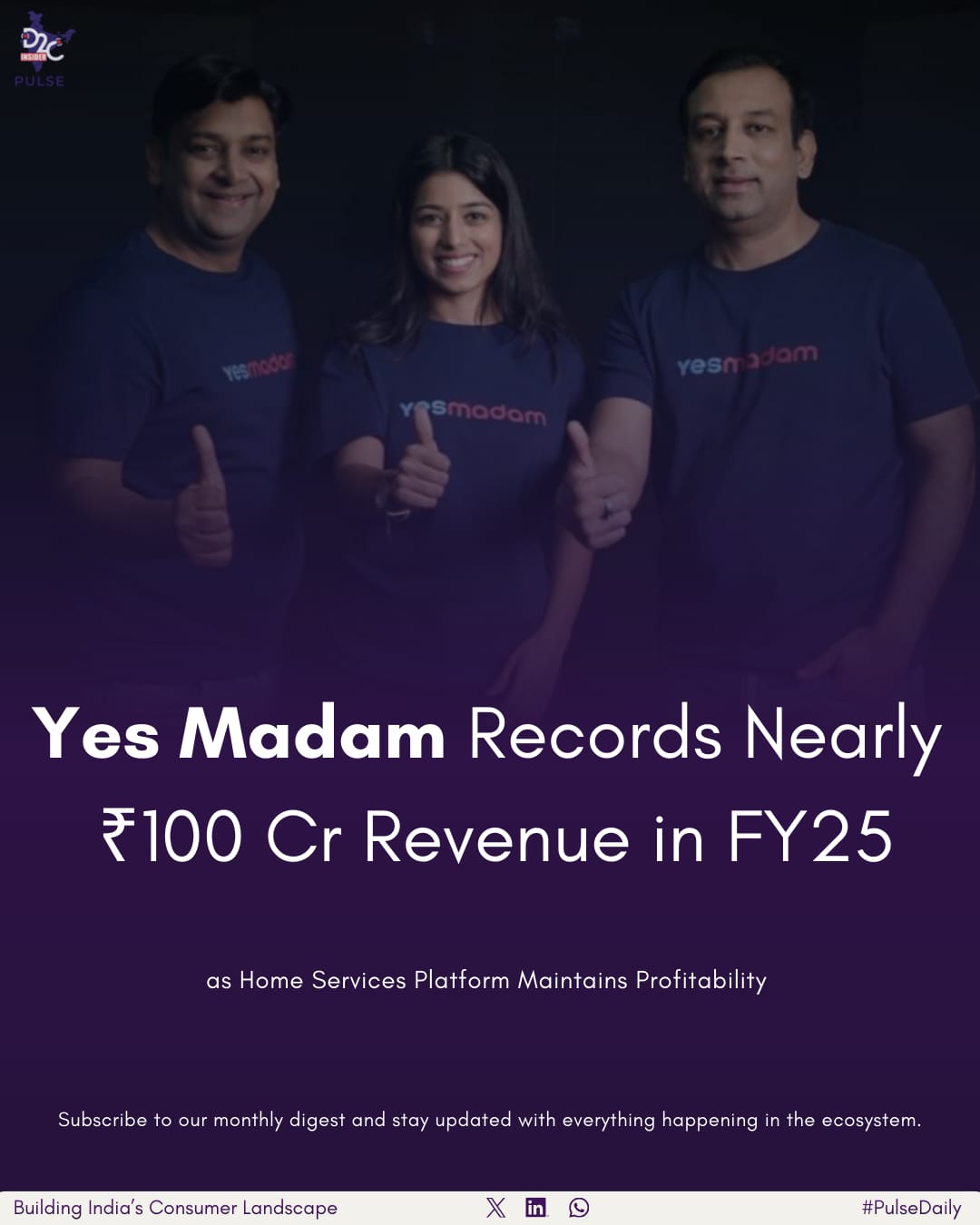
Yes Madam, a home salon service, has announced some great financial results for the year ending in March 2025. The company, which is located in Noida, almost doubled its income, going from ₹45.8 crore in FY24 to ₹92.5 crore in FY25. Plus, they stayed profitable, which is not something you see often with service-based startups in India.
Yes Madam started in 2016. They run a tech-based platform for beauty and wellness services at home. Customers can use their app or website to book things like haircuts, facials, waxing, massages, and other salon treatments. Then, the company sends trained beauty pros to their homes. Yes Madam mainly makes money through commissions on bookings, product sales, and subscriptions.
These results show some good progress in the Indian direct-to-consumer (D2C) service world, where online platforms are changing how people get everyday services. According to official financial documents, Yes Madam’s operating income almost doubled to ₹92.5 crore in FY25.
A big reason for this growth is their product sales. Beauty and personal care products made up about 54% of their total operating income, bringing in ₹50 crore in FY25. The other ₹42.5 crore came from services, like commissions from connecting customers with beauty pros, subscriptions, and royalties. This mix of income shows a D2C trend in India where platforms use both services and products to increase profits and grow steadily.
On top of their main income, Yes Madam also made ₹2 crore from other sources, like penalty charges and interest from fixed deposits. This boosted their total income for FY25 to ₹94.5 crore, making them one of the fastest-growing D2C brands in the home services area in 2025.
As for what they spent money on, buying products was their biggest cost. These costs rose to ₹31.4 crore in FY25, which is about 34% of their total expenses. Marketing was the second biggest expense, increasing 3.7 times to ₹27 crore, as they invested more in getting their name out there and attracting customers.
Employee costs also went up as the company grew. They spent ₹18.14 crore on employee benefits in FY25, up from ₹12 crore in FY24, which is a 52% increase. Other costs, like IT, cashback deals, consulting, and rent, also added to their expenses.
In total, Yes Madam’s spending doubled to ₹92.4 crore in FY25, compared to ₹45.5 crore in FY24. Even with these higher costs, the company still made a profit of ₹1.8 crore in FY25, thanks to good cost management and better operations.
Looking at their numbers, Yes Madam had a Return on Capital Employed (ROCE) of 2.29% and an EBITDA margin of 0.57% in FY25. For every ₹1 they made, they spent about ₹1, meaning they were close to breaking even while still being profitable.
At the end of FY25, Yes Madam had ₹5.5 crore in cash and ₹21.4 crore in current assets, which means they’re in a good place financially as they keep growing.
In the D2C world, Yes Madam is one of the few service-based startups in India that has managed to be profitable while growing. Many home service companies have had trouble making a profit because of high customer costs and complicated operations. Yes Madam’s success shows that combining product sales with services is a good strategy, and more and more consumer platforms are doing it.
The rise of companies like Yes Madam also shows that Indian consumers are looking for convenience, at-home services, and easy online booking in the beauty and wellness market. As more people in cities want convenient and personalized services, tech-based home service platforms are becoming more popular.
So, for anyone following D2C news in India, Yes Madam’s results prove that tech-powered consumer platforms that mix service delivery with product sales have a lot of potential. With strong income growth, better operations, and consistent profits, Yes Madam is becoming a key player in India’s quickly growing home services market.