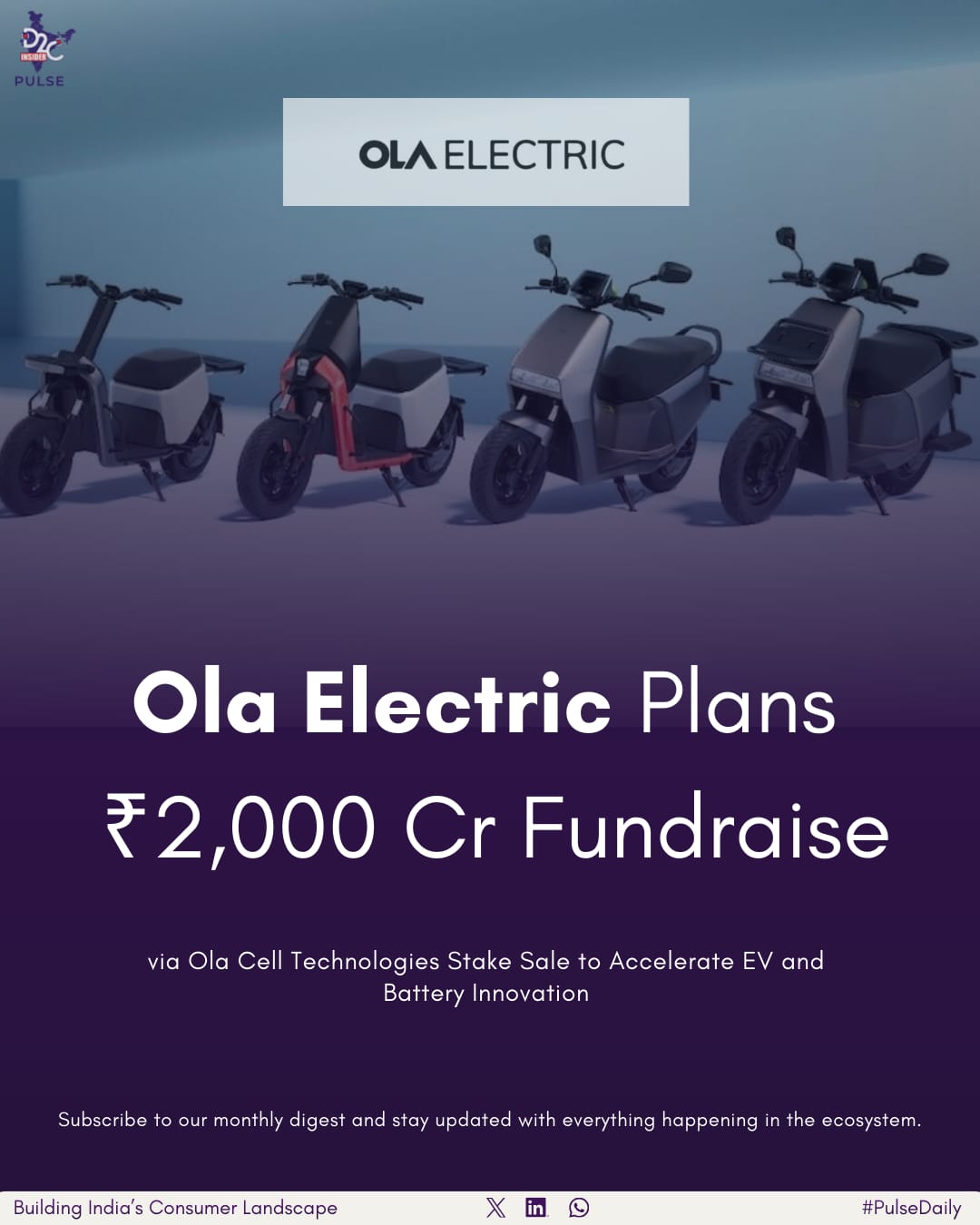
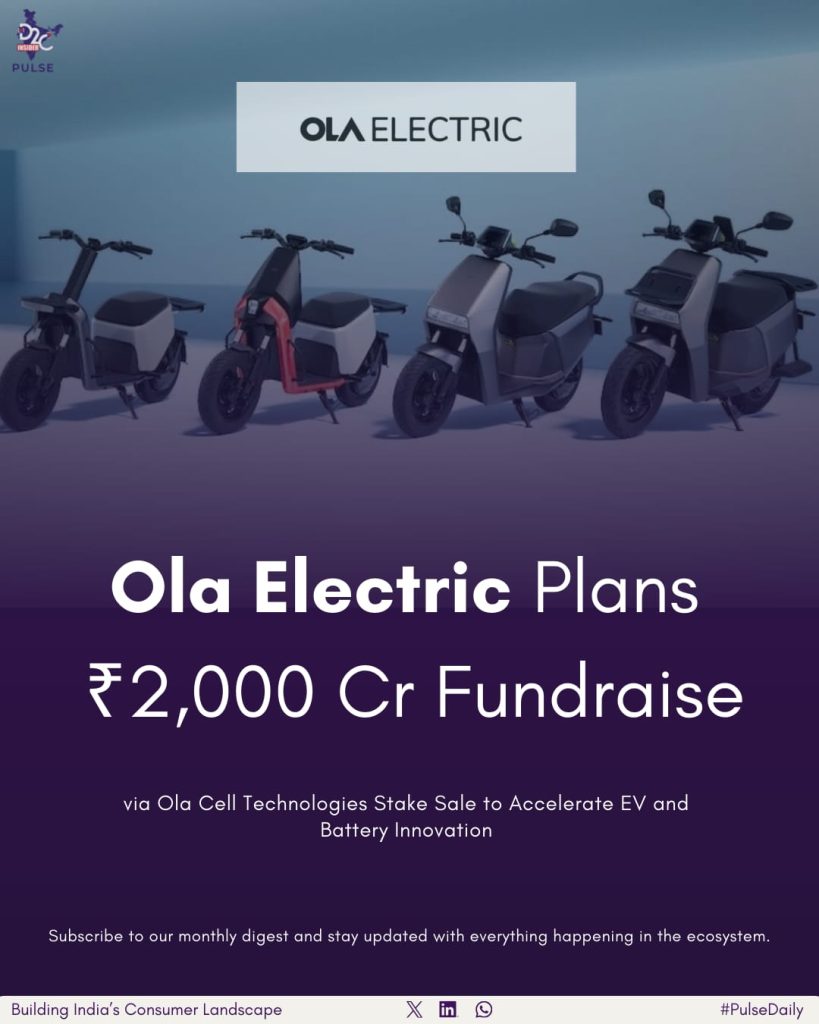
Ola Electric is reportedly planning to raise up to ₹2,000 crore (approximately $216.8 million) by selling a minority stake in its battery manufacturing subsidiary, Ola Cell Technologies (OCT). This fundraising effort reflects the company’s ongoing commitment to enhancing its battery ecosystem while advancing its electric vehicle objectives in India’s rapidly evolving mobility market.
Sources indicate that Ola Electric is in discussions with sovereign wealth funds and global infrastructure investors to secure this funding. Investment banks Avendus Capital and Motilal Oswal have been appointed to oversee the capital raise, which is expected to support the acceleration of Ola Electric’s battery technology development and manufacturing capacity.
Although primarily focused on electric vehicles, Ola Electric’s growth aligns with broader trends in India’s Direct-to-Consumer (D2C) ecosystem, where companies are using technology, capital, and infrastructure to build significant market positions. Their expansion strategy corresponds with emerging D2C trends anticipated through 2025, emphasizing innovation, manufacturing scale, and technology ownership as key growth factors.
The planned ₹2,000 crore funding round would be completed through selling a minority stake in Ola Cell Technologies. Given the critical role of battery technology in the EV value chain, Ola Electric has been actively investing in creating a vertically integrated electric mobility ecosystem, spanning vehicle production, battery manufacturing, and energy infrastructure.
These fundraising talks coincide with the company’s ongoing evaluation of capital raising options. In November 2025, Ola Electric’s board approved a plan to raise ₹1,500 crore via a qualified institutional placement (QIP), although this has not yet been executed.
Ola Electric’s focus on battery innovation is consistent with broader industry patterns where EV manufacturers prioritize advanced battery production and supply chain improvements to enhance performance, reduce costs, and increase energy efficiency. These efforts mirror shifts within the Indian D2C ecosystem, where infrastructure investment and innovation are fundamental to building scalable consumer products.
Shares of Ola Electric responded positively to the announcement, closing the trading session up 5.28% at ₹24.32, indicating investor confidence in the company’s strategic direction.
This fundraising initiative comes amid financial challenges for Ola Electric. In the third quarter of FY26, the company reported a 55% year-on-year and 32% quarter-on-quarter decrease in operating revenue, falling to ₹470 crore. Simultaneously, net losses were reduced by 14% year-on-year to ₹418 crore, reflecting ongoing efforts to enhance operating efficiencies.
Vehicle deliveries likewise declined during this period, with 32,680 electric two-wheelers delivered in Q3 FY26, down from 84,029 units in the same quarter the previous year—a 61% decrease. Nonetheless, the company continues to invest in its technology and manufacturing infrastructure to support long-term growth.
The financial results also underscore pressures on Ola Electric’s liquidity. For the nine months ended December 31, 2025, the company recorded a negative operating cash flow of ₹866 crore, mainly due to operating losses and slower-than-anticipated sales growth.
Despite these short-term setbacks, Ola Electric remains committed to developing a comprehensive EV ecosystem focused on manufacturing, battery technology, and mobility innovations. The company previously raised funds through Ola Cell Technologies, which has also announced plans to invest ₹877.6 crore in Ola Electric Technologies Pvt Ltd, a group entity dedicated to vehicle manufacturing and technology development.
As India moves towards greater adoption of electric mobility, companies like Ola Electric play a vital role in shaping the sector’s future. Continued investment in battery technology and infrastructure aims to strengthen the company’s standing within India’s expanding EV market, while contributing to broader innovation trends within the Indian D2C and technology landscapes.