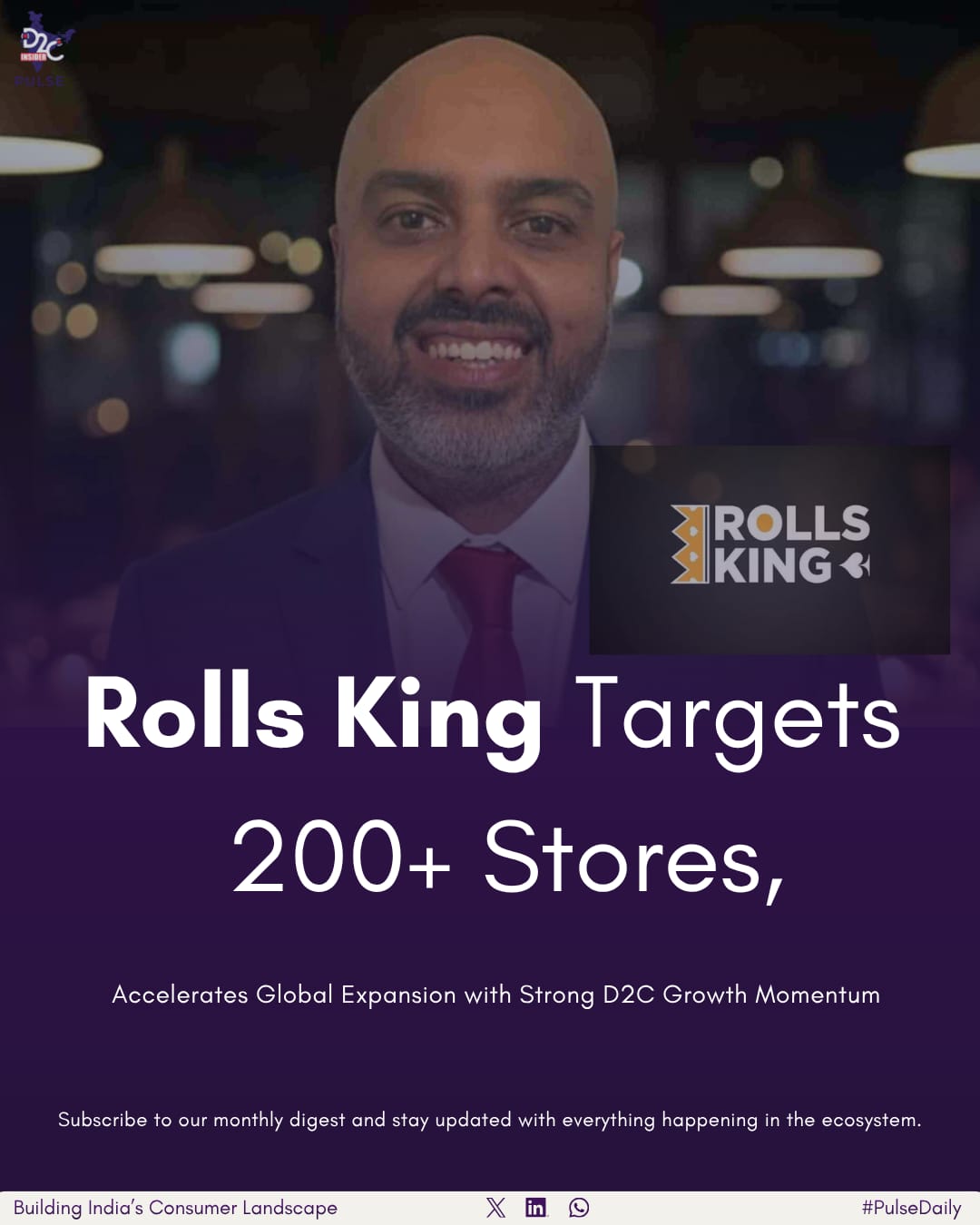
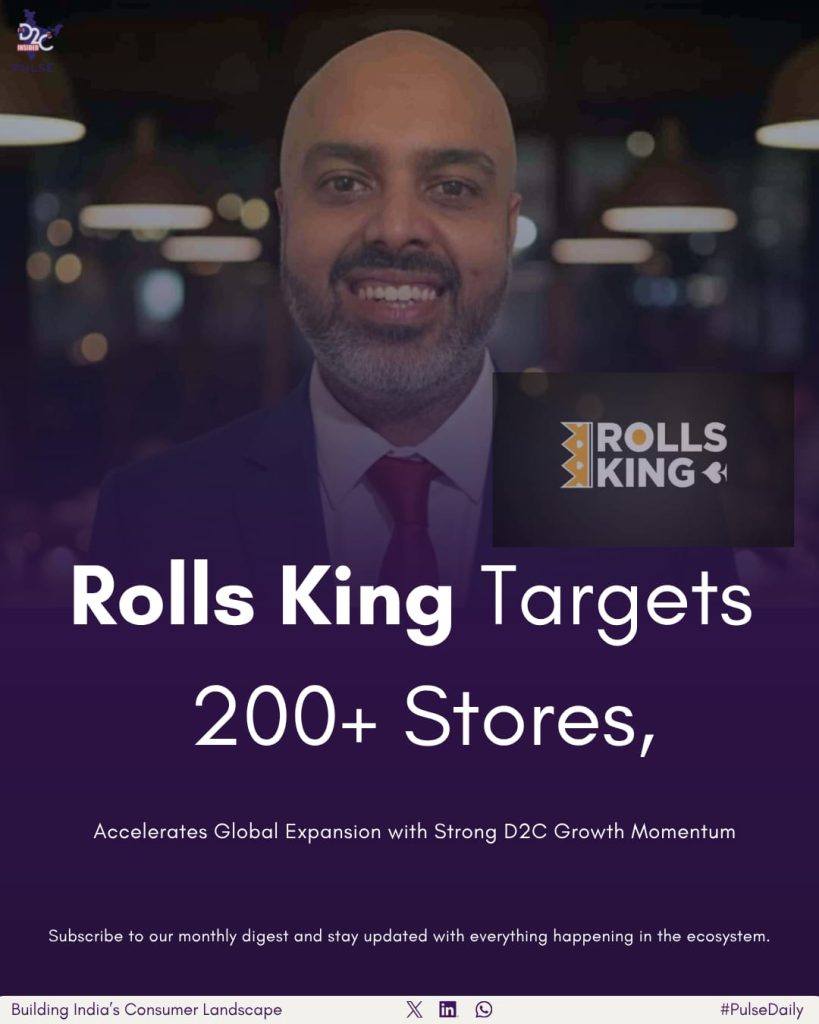
Rolls King is developing into one of the faster-growing direct-to-consumer (D2C) brands within the food sector, combining core aspects of India’s D2C landscape with a clear focus on a specific category. Starting as a single food truck in Noida in 2011, it has grown into a network of 135 stores, with plans to expand beyond 200 outlets and introduce Indian street food to international markets.
At a time when global quick-service restaurant (QSR) chains dominated India’s organized food sector, Rolls King recognized an opportunity in the D2C food segment—providing quick, hygienic, affordable Indian meals targeted at younger consumers. This insight positioned the brand well within India’s evolving D2C market, distinguishing it in current D2C startup and industry developments.
Unlike many recent D2C ventures relying heavily on research and data, Rolls King was established based on intuition and consumer familiarity. The brand adapted Kolkata-style kathi rolls to suit North Indian tastes, achieving a strong product-market fit. This approach resonates with broader trends where simplicity and consumer understanding contribute significantly to sustained D2C brand success.
A key milestone occurred when the brand secured retail space in the DLF Mall of India around 2014–15, marking its entry into organized retail. Since then, Rolls King has expanded steadily, supported by repeat customers and positive word-of-mouth—both important factors in D2C consumer behavior and a sustainable business model in India.
Currently, the company operates a hybrid model but is gradually shifting toward owning stores directly. From 50 predominantly franchise-operated outlets in 2020, Rolls King has been reclaiming franchises to enhance control. This move aligns with a broader pattern among venture capital-backed and premium D2C brands in India, prioritizing consistency and brand value over rapid but fragmented growth.
One of Rolls King’s key advantages lies in its delivery-first model. Approximately 70% of its revenue is generated through online channels, aligning with fast commerce and digital consumption trends. With kitchen preparation times around six minutes and delivery completed within roughly 25 minutes, the operation is optimized for speed—a critical factor in the evolving D2C retail and e-commerce environment.
What sets Rolls King apart in India’s competitive D2C space is its focused strategy. Rather than diversifying widely, the brand is concentrating on grab-and-go meals. This clear focus corresponds with emerging market trends suggesting that category leadership can outperform diversification. By innovating within the category—introducing items like momo rolls, pizza rolls, and tandoori tacos without branching into unrelated areas—the brand sustains a strong identity and market position.
Operational efficiency is another central element. With an in-house supply chain and comprehensive control over processes, Rolls King maintains quality, consistency, and scalability—foundational elements for a brand aiming at significant funding and growth. This setup also facilitates efficient supply chain innovations, supporting expansion across multiple cities.
The company is investing in technology through its proprietary system, “Rolls King Intelligence,” which integrates finance, inventory, supply chain, and sales functions. This demonstrates how D2C startup valuations increasingly depend on technology-enabled scalability and operational sophistication rather than revenue alone.
Financially, the brand aims for annual growth between 20 and 25%, with the possibility of accelerating to 40% supported by forthcoming funding rounds and interest from angel investors. Plans to grow from 135 to over 225 stores within two years indicate strong revenue growth and execution capability.
Internationally, Rolls King is exploring markets in Europe and the Middle East with the goal of establishing a global Indian QSR brand. This aligns with broader industry conversations around D2C IPOs, exits, and the international rise of Indian brands.
Within the daily landscape of D2C developments in India, Rolls King exemplifies how a combination of local insight, solid fundamentals, and focused positioning can enable scale. In an evolving D2C ecosystem, the brand is not only expanding but also redefining how Indian food brands compete on a global stage.
With a clear D2C go-to-market approach, effective execution, and a vision centered on the grab-and-go segment, Rolls King is shaping more than a QSR chain; it is influencing the future of India’s direct-to-consumer food space.