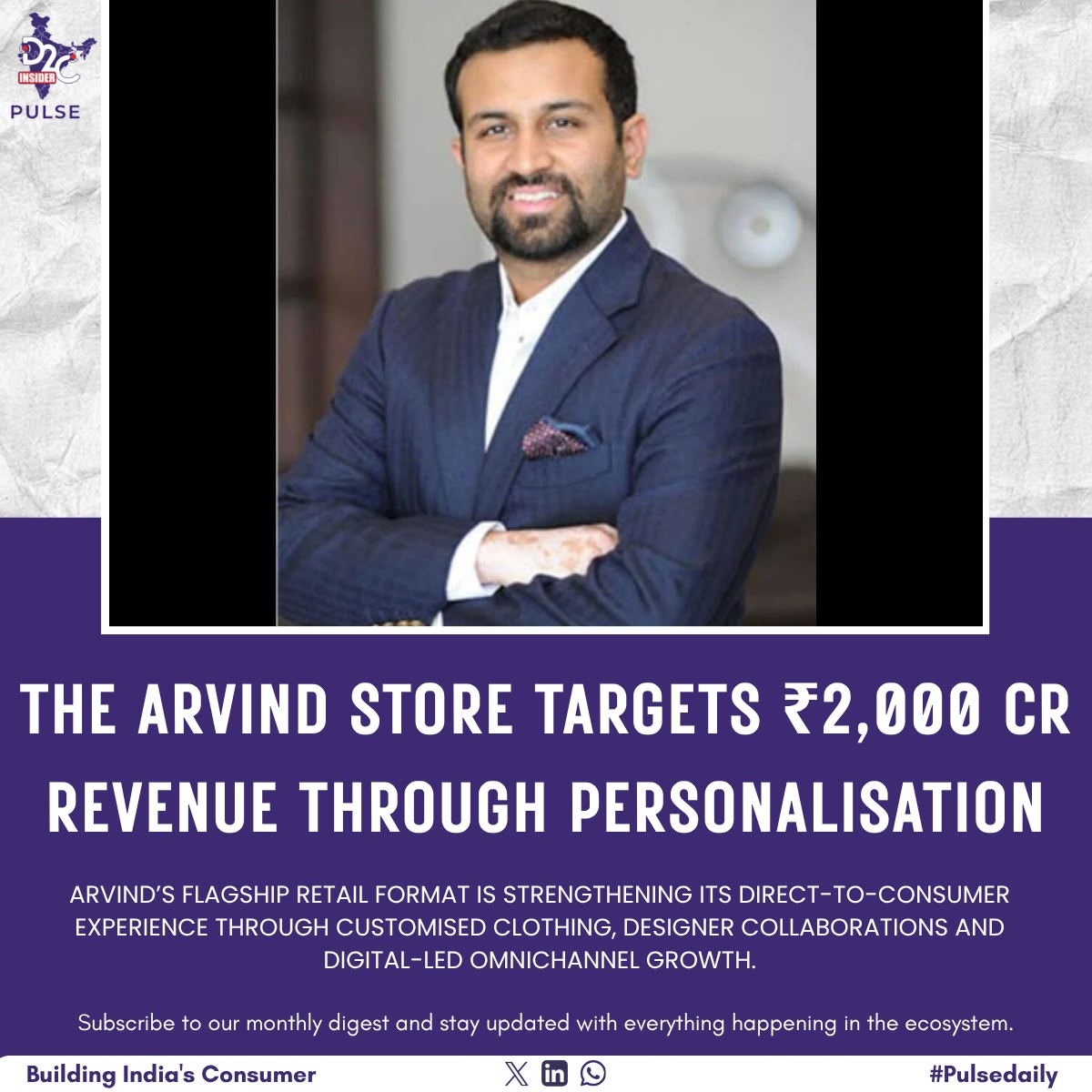
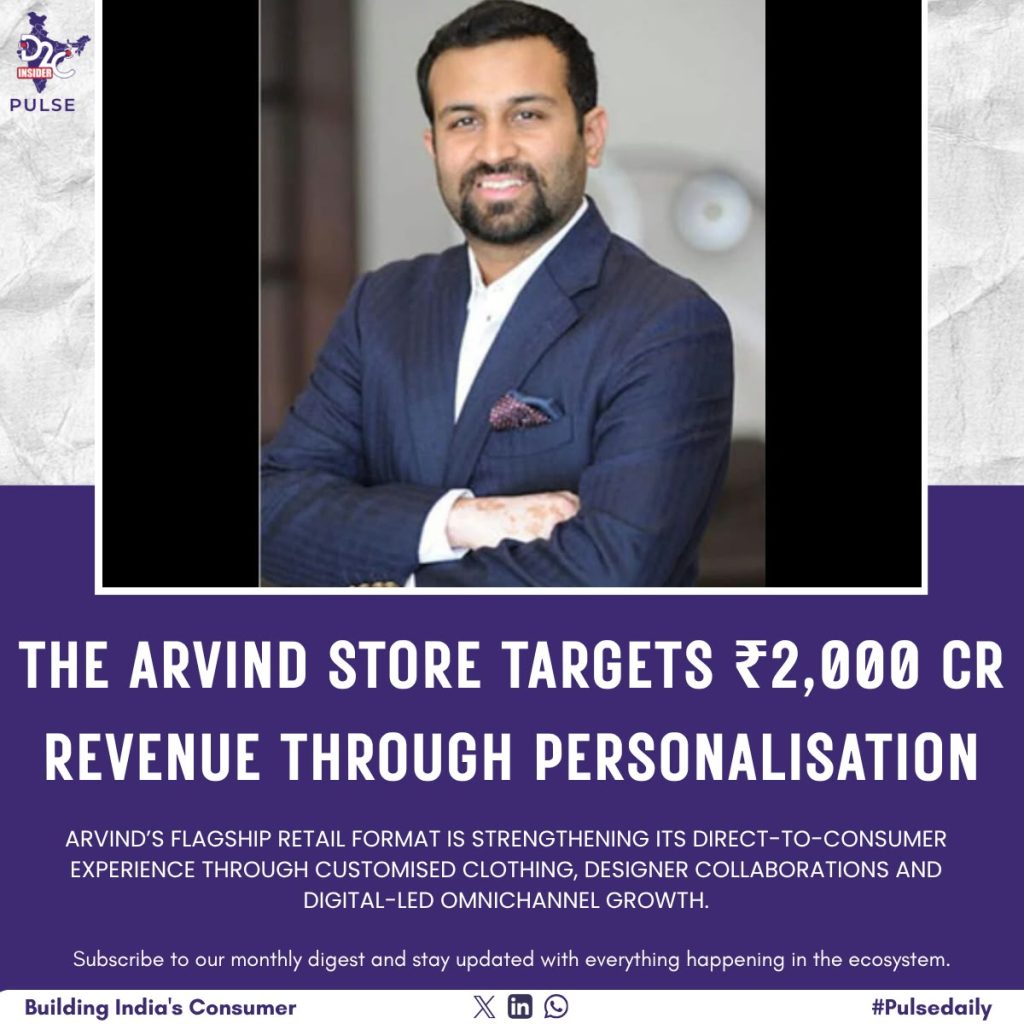
Arvind’s flagship retail format is strengthening its direct-to-consumer experience through customised clothing, designer collaborations and digital-led omnichannel growth.
The Arvind Store, the flagship retail format of Arvind Ltd, is targeting nearly ₹2,000 crore in revenue over the next two to five years, building on its existing business of over ₹1,000 crore. Growing at approximately 20% annually, the business is evolving beyond traditional fabric and tailoring retail towards a personalised shopping experience, combining customised clothing, designer-led collections and digital tools.
This shift reflects an opportunity for established apparel businesses to deepen direct customer relationships through differentiated products and personalised services. Rather than competing solely on price, The Arvind Store is focusing on helping customers express their individual styles.
A key initiative is its collaboration with menswear designer Ashish Soni, offering wedding and non-wedding looks starting at around ₹10,000. The designer-led styling studio will initially launch across 50 stores, with plans to expand the experience across more than 150 outlets.
Digital tablets will allow customers to visualise garments and customise designs, fabrics, buttons, collars and cuts. With approximately 1,000 fabrics and 50 combinations available, the initiative aims to bring greater choice and personalisation directly into the in-store shopping journey.
Average transaction value has doubled over the past three to four years, supported by premium fabrics and differentiated cuts. The company sees personalisation as a way to encourage customers to pay more for distinctive products rather than standard alternatives.
Technology will also support the business’s omnichannel strategy. Arvind manages around 30,000 stock-keeping units (SKUs), each with an average lifecycle of six months. Artificial intelligence could improve demand forecasting, production planning, sizing, pricing and markdown decisions. Digital currently contributes around 30% of its omnichannel business, with the share potentially reaching 50% over time.
Beyond retail expansion, free trade agreements with the UK, Australia, New Zealand and Japan, alongside progress with the European Union, could create export opportunities. Arvind’s vice chairman, Kulin Lalbhai, sees potential for India to increase its share of global textile and apparel trade from around 5% to 10%.
The company is also advancing sustainability at its 500-acre Ahmedabad facility, using treated sewage water and sourcing 80% of its power from green energy, with a target of 100%.
For The Arvind Store, the growth strategy combines personalised retail, digital engagement and differentiated products to strengthen its consumer-facing business.
Source: Based on publicly available reporting, with additional editorial adaptation and analysis.