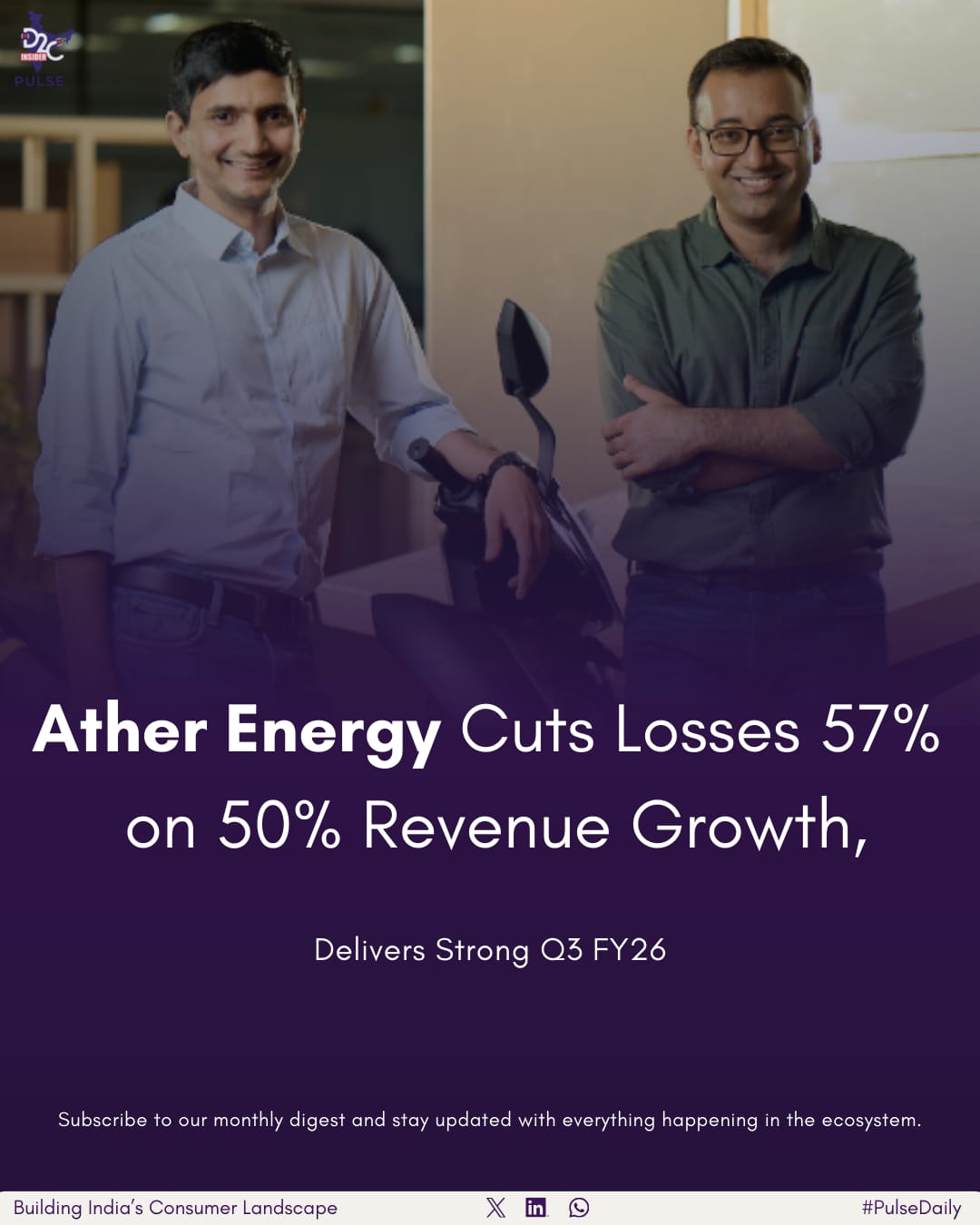
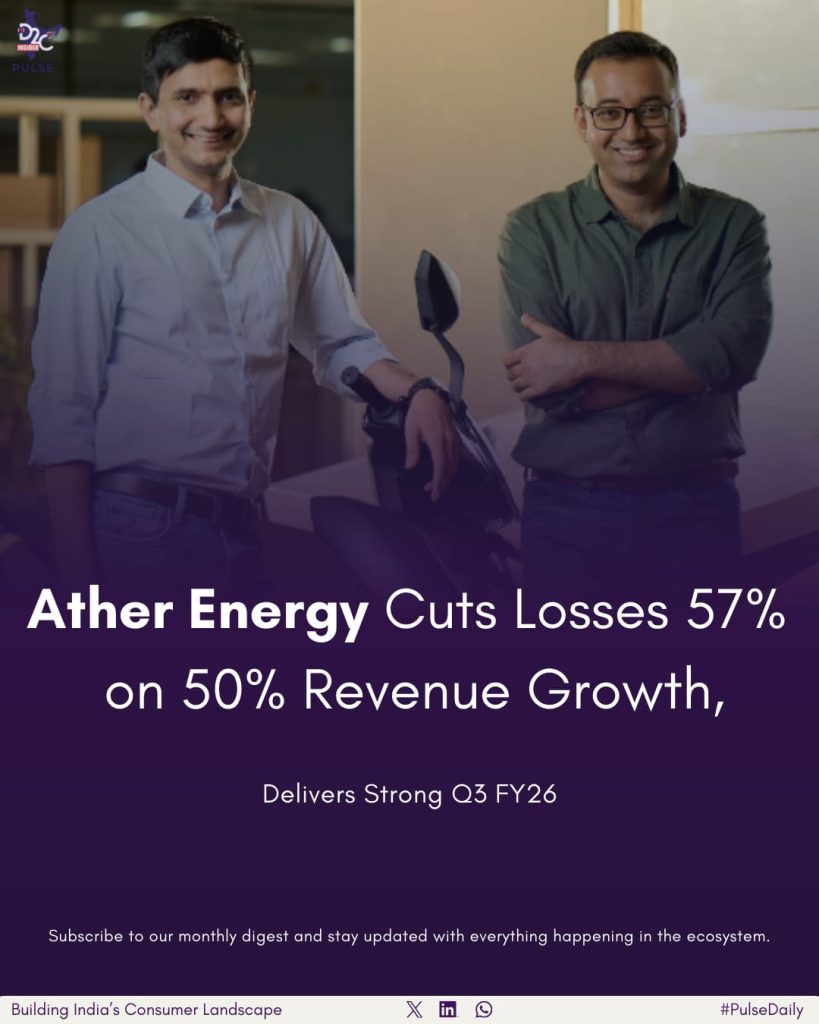
Ather Energy had a pretty good Q3 in FY26. They’re really trying to make their business sustainable and profitable in India’s quickly changing market where companies sell directly to customers. The electric scooter company cut its losses by a lot – 57.1% compared to last year, landing at INR 84.6 crore. That’s a big drop from the INR 197.5 crore they lost in Q3 FY25. Even compared to the last quarter, losses are down 45% from INR 154.1 crore. This means they’re running things better and being smart about how they spend money.
Their income from operations went up by 50.2% to INR 953.6 crore, which is up from INR 634.9 crore in the same time last year. Compared to the last quarter, income is up 6%, which shows they are still making progress even though the electric vehicle market is competitive. If you add in other income of INR 42.1 crore, Ather’s total income for the quarter was INR 995.7 crore. This helps them stand out as one of the biggest direct-to-consumer brands in the electric vehicle world in India.
Total spending increased 26.8% from last year to INR 1,075.3 crore. Still, it’s not as high as the income increase. This shows they are controlling costs better. Also, their gross profit margin went up by 700 basis points to 25%. Even if you don’t count government money, it was still a solid 23%. This is because they are getting better at managing their supply chain, getting better prices because they’re buying in bulk, and being more efficient in manufacturing. These are all important for building a strong direct-to-consumer business in India.
As profit margins improved, their EBITDA performance also showed good progress. The EBITDA margin improved by 1,600 basis points compared to last year, reaching (-3%) in Q3 FY26. This clearly shows they are getting closer to breaking even. This progress is similar to what’s happening in the broader direct-to-consumer market right now, where big consumer brands are starting to focus on scaling efficiently instead of just growing as fast as possible.
In terms of actual sales, Ather sold 68,000 scooters during the quarter, a 50% increase from last year and a 3% increase from last quarter. People seem to like their scooters, especially the ones targeted to families, and this is helping sales. They’ve now sold over 200,000 electric scooters, which makes their position in India’s direct-to-consumer market even stronger.
Ather is also still growing its direct-to-consumer approach by opening more stores. They added 76 new ones, bringing the total to 600 by the end of December 2025. They want to have 700 stores by the end of FY26. This will help them reach more customers and connect with them better in different areas.
On the tech side, Ather released some new features that can be updated over the air, like Infinite Cruise, Remote Control, dashboards in local languages, and a bigger AtherStack Pro software package. These updates support Ather’s position as a tech-focused, direct-to-consumer Indian brand that combines hardware, software, and user experience smoothly.
Ather also gained market share, confirming that their growth strategy is working. Their electric scooter market share rose to 18.8% in Q3 FY26 because they are selling in more places and people really like their family scooter, the Rizta. In South India, they are still the leader with 24.4% of the market. Central India also saw big gains, with their market share almost doubling to 17.4%, especially in Maharashtra, Gujarat, Madhya Pradesh, and Odisha. In North and East India, their market share went from 6% in Q3 FY25 to 12.6%, with particularly good results in Jammu & Kashmir, Punjab, and Rajasthan.
Even though Ather’s stock went down 3.01% to INR 606.7 on BSE after the results, the numbers show that the business is getting stronger. The India’s direct-to-consumer industry news is now focusing on growing with profitability, so Ather Energy’s Q3 performance places them as one of the fastest-growing direct-to-consumer brands that is dealing with the electric vehicle change with scale, efficiency, and a long-term plan.