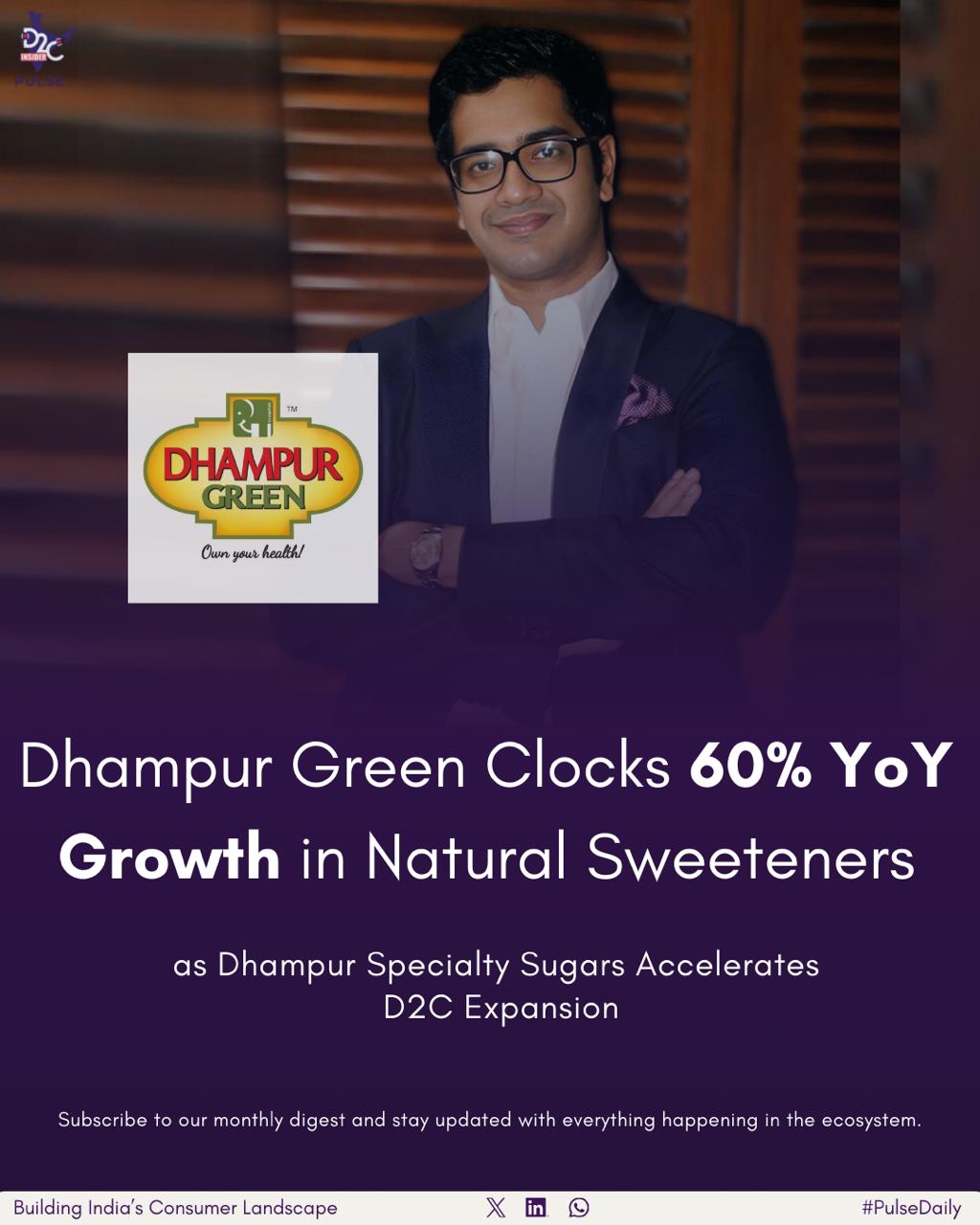
Dhampur Specialty Sugars is seeing great gains as India’s direct-to-consumer market shifts to healthier, clean-label foods. The company is paying more attention to its Dhampur Green brand, which has grown almost 60% yearly because people want natural sweeteners like jaggery and khandsari.
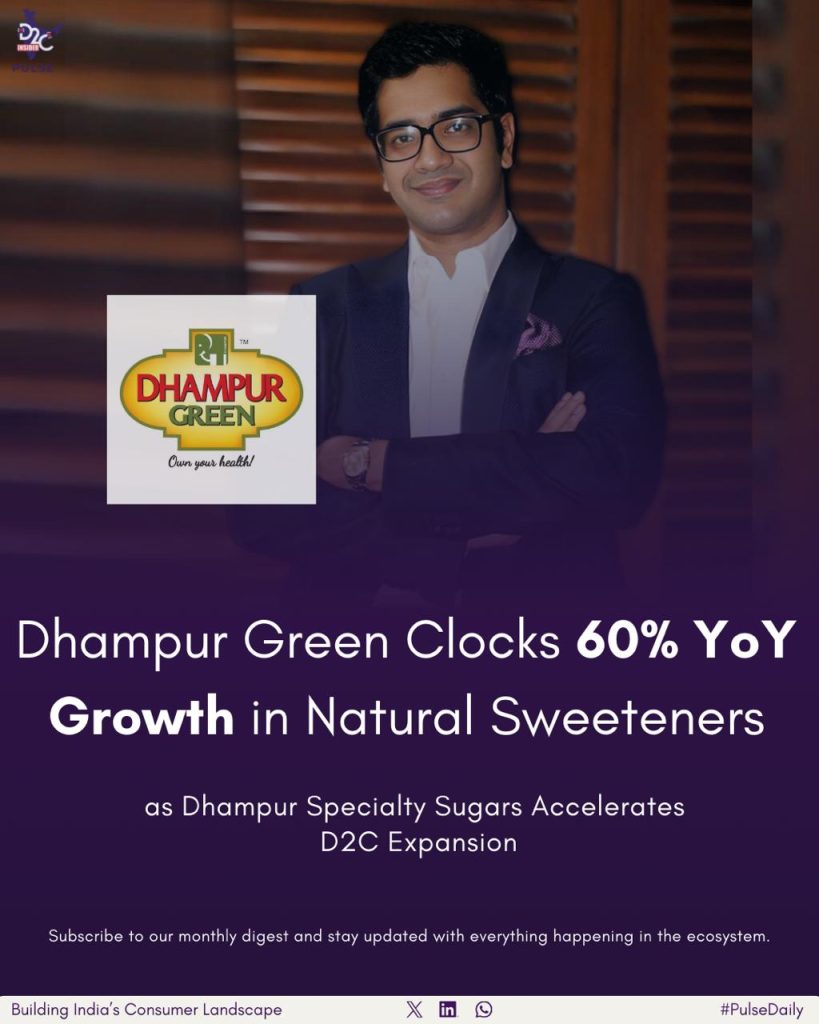
According to Shrey Gupta, a Director at Dhampur Specialty Sugars, this rise is happening across different sales channels. The brand is now in general stores, modern supermarkets, online quick commerce platforms, and international markets. This multiple channel method is becoming common in the Indian food and beverage direct-to-consumer market.
Quick commerce has become a big revenue source. It now makes up 15–20% of Dhampur Green’s income, although it was almost nothing four years ago. Sales are almost evenly divided between regular stores, modern supermarkets, and fast-delivery platforms. This mix works well for Dhampur Green’s customers, who are usually urban, health-conscious, and want convenience.
Exports are increasing, mainly to the United States, Canada, and Australia. The Indian population in those countries wants traditional sweeteners like jaggery and khandsari. This makes Dhampur Green a culturally relevant brand worldwide.
The variety of products has aided growth. While specialty sugars used to be their main focus, natural sweeteners are now what’s driving growth. New items, like spiced jaggery powders and infused honey, are well-received. This change means Dhampur Green is moving away from basic pricing and selling unique, branded products. People are willing to spend extra for products they consider traceable, high-quality, and healthy.
Most sales are still in Tier I cities, but Tier II markets are starting to grow. Packaged jaggery is becoming popular in smaller cities, even though it costs more than unpackaged options.
The company faces logistical issues because manufacturing is mainly in North India, and the products don’t cost much individually. To fix this, they’re thinking about creating regional distribution centers in western and southern India. This would make the supply chain better, shorten delivery times, and allow for local product variations.
Dhampur Green is also getting into related health food areas, like salts and alternative grains. Their plan is to focus on reliable sourcing, traceability, and steady quality instead of just competing on price.
The company is using its profits to expand, without raising outside funds. While they might consider funding later if growth continues, they’re currently scaling carefully.
Dhampur Specialty Sugars’ change shows how older companies can create successful direct-to-consumer brands by combining traditional sourcing abilities with modern sales methods. As natural sweetener demand rises, Dhampur Green could become a leading brand in India’s clean-label food market.