
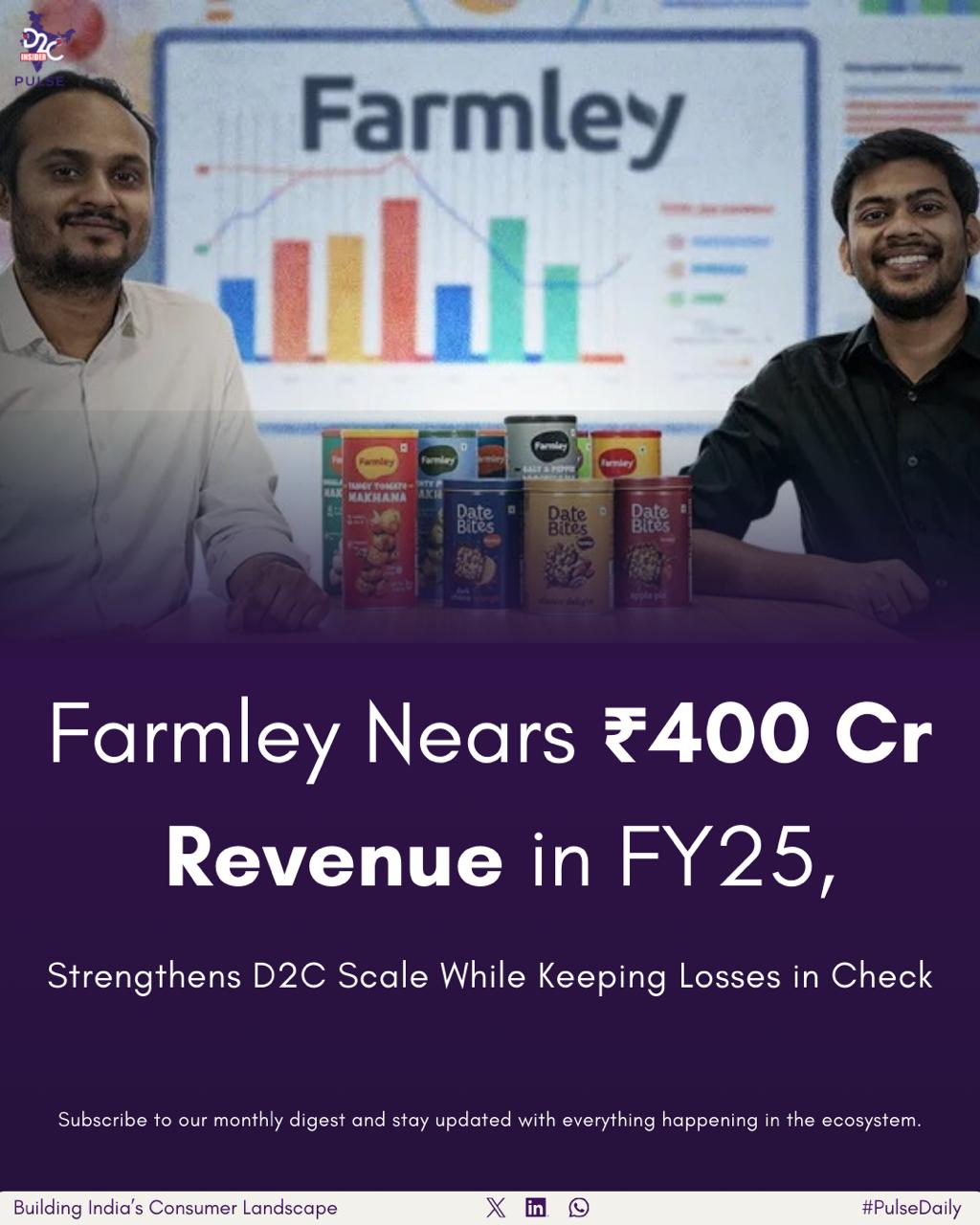
Farmley, a healthy snack company, is doing very well in India’s growing direct-to-consumer (D2C) market. In fiscal year 2025, Farmley stood out by increasing its business while controlling losses. This success helped them raise $40 million in Series C funding as FY26 began.
Farmley’s revenue went up 71% to ₹394 crore in FY25, according to financial records. This growth puts them close to the ₹400 crore mark and makes them one of India’s fastest-growing D2C food brands. Their total earnings for FY25 were ₹396 crore, including other income.
Akash Sharma and Abhishek Agarwal started Farmley in 2017. They sell healthy snacks like nuts and trail mixes, which are in demand as people become more health-conscious. The company focuses on product sales, which is a D2C model that Indian investors often like.
Farmley invested a lot in expanding its operations. The cost of materials was the biggest expense, rising 57% to ₹281 crore in FY25. Advertising costs doubled to ₹52 crore as Farmley increased its presence on online platforms, which is a common trend in the D2C market.
Employee costs rose 69% to ₹27 crore due to team growth, and logistics costs increased 54% to ₹20 crore because of higher sales volumes and faster deliveries. Overall, total spending rose 63% to ₹419 crore in FY25.
Despite these high expenses, Farmley’s revenue grew faster, reducing its net loss by 15% to ₹22.5 crore in FY25. Profitability also improved, with better EBITDA margins and ROCE. The company spent ₹1.06 to earn one rupee of revenue in FY25, an improvement from ₹1.12 in FY24.
As of March 2025, Farmley had ₹163 crore in current assets, including ₹22 crore in cash. They have raised a total of $55 million in funding, including a $40 million Series C round led by L Catterton. The founders still own 52% of the company.
It’s important to note that Farmley faces competition and pressure on margins from quick commerce partnerships and discounts. Still, Farmley’s ability to grow and reduce losses makes it a strong D2C brand.
Farmley’s FY25 results show that D2C brands that can expand their reach and improve their financial performance are more likely to succeed.