
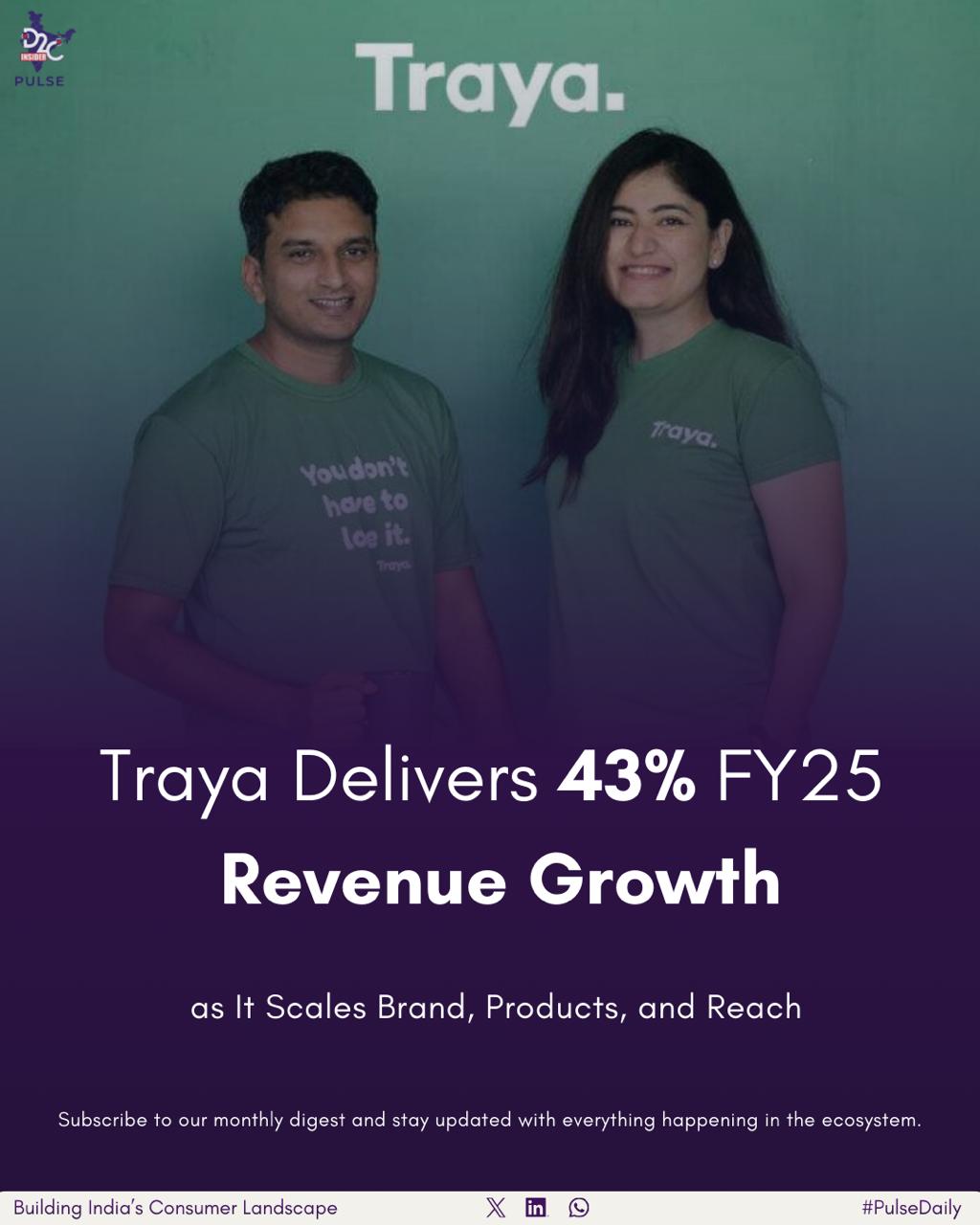
India’s direct-to-consumer ecosystem continues to see strong momentum in health and wellness, and Traya has emerged as one of the notable D2C brands India scaling aggressively in this space. The D2C haircare and wellness brand reported a robust 43.2 percent year-on-year growth in FY25, underlining sustained consumer demand for personalised, science-backed hair loss solutions in India’s expanding wellness market.
Traya’s operating revenue rose to ₹338 crore in FY25 from ₹236 crore in FY24, marking another strong year of topline expansion. The growth was largely driven by its core portfolio of ayurvedic oral and topical solutions, dietary supplements, cosmetics, and medicinal products, which together contributed 99.6 percent of operating income. Additional revenue streams such as doctor consultations, shipping income, and hair transplant-related services complemented the brand’s primary D2C business model.
Within the broader context of D2C news India and Indian D2C updates, Traya’s performance reflects how specialised, problem-led wellness brands are gaining traction by addressing large, persistent consumer pain points. Rising stress levels, pollution, lifestyle changes, and nutritional gaps continue to drive awareness around hair fall and scalp health, keeping demand strong for non-invasive, personalised treatment plans delivered through direct-to-consumer India channels.
To fuel this growth, Traya significantly increased investments across marketing, talent, and operations in FY25. Sales and marketing expenditure climbed 40 percent year-on-year to ₹138 crore, as the brand focused on customer acquisition, brand building, and performance marketing across digital platforms. Employee benefit expenses more than doubled, rising 130 percent to ₹83 crore, reflecting investments in medical experts, technology, customer support, and operational teams needed to support scale.
In addition, the cost of materials consumed stood at ₹83 crore during the year, while higher freight charges, rentals, legal costs, and other operational expenses further pushed overall costs upward. As a result, total expenditure rose 60 percent to ₹366 crore in FY25 from ₹229 crore in FY24. The faster pace of cost expansion compared to revenue growth meant Traya reported a net loss of ₹23 crore in FY25, compared to a profit of ₹8.6 crore in FY24.
While profitability dipped, the broader D2C industry news narrative increasingly recognises such phases as part of scale-led brand building. Traya’s financial efficiency metrics reflected this transition, with return on capital employed (ROCE) at -20.47 percent and EBITDA margin at -6.18 percent. From a unit economics perspective, the brand spent ₹1.08 to generate every rupee of operating revenue—indicating tight but intentional reinvestment to support long-term growth.
Traya operates in an increasingly competitive category, with alternatives ranging from over-the-counter products to clinical hair transplant services. However, the company’s integrated approach—combining doctor consultations, customised formulations, and a strong D2C business India playbook—positions it well within evolving D2C market trends 2025. Consumer preference for preventive, non-surgical solutions continues to create headroom for growth in the segment.
As the D2C ecosystem India matures, brands like Traya are shifting focus from short-term profitability to building defensible moats through trust, data, and personalised outcomes. With strong revenue momentum, deepening consumer awareness, and continued investment in brand and product innovation, Traya remains a key name to watch among D2C wellness startups shaping India’s next phase of consumer health adoption.