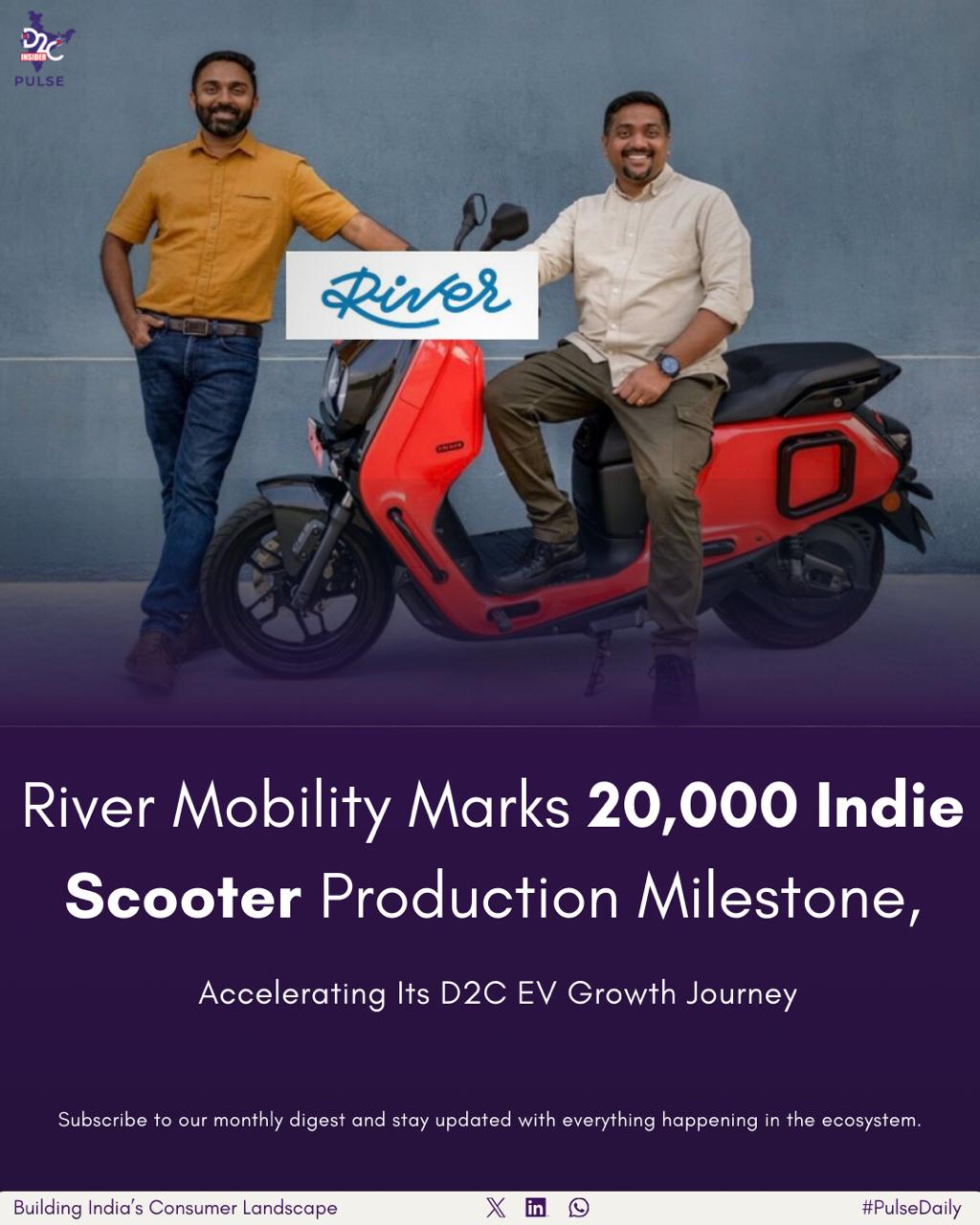
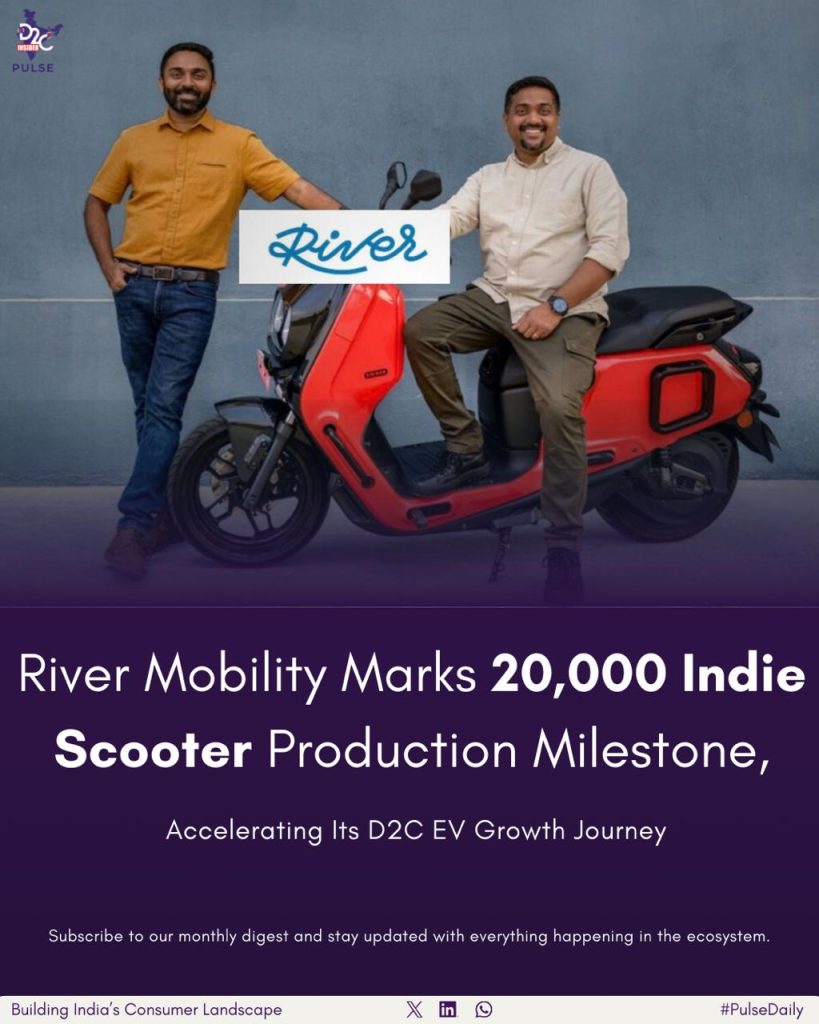
River Mobility just hit a big milestone, delivering its 20,000th Indie electric scooter from its Hoskote plant in Karnataka. This comes just two years after the Indie launched and six months after hitting the 10,000-unit mark. This shows they’re ramping up production, demand is up, and their direct-to-consumer strategy in India is working.
Looking at D2C trends in India, River Mobility’s progress shows how a good product and careful growth can create momentum in capital-heavy areas like EVs. Unlike some startups, EV brands in India need to handle manufacturing, retail growth, and customer experience all at once. River doubling production in six months suggests growing trust in their brand and readiness to scale.
Aravind Mani and Vipin George started River Mobility in March 2021. They’ve carved out a place as a premium, city-focused electric scooter brand for daily commutes. The Indie scooter has gained popularity among city riders looking for durability, storage, and practicality. This has allowed River to expand from Bengaluru to Rajasthan, Madhya Pradesh, Delhi, and Maharashtra, strengthening its market presence.
As part of their D2C plans, River opened a store in Delhi and launched the Indie Gen 3, their latest scooter. These upgrades prove River focuses on D2C product releases based on real-world feedback, not just cosmetic changes. Right now, they have almost 40 stores across India, with a good footprint in cities like Bengaluru, Chennai, Hyderabad, Kochi, and Coimbatore. They plan to enter Punjab, Uttar Pradesh, and Gujarat, signaling an aggressive but measured omnichannel D2C approach.
From a D2C point of view in India, River’s manufacturing-led approach is key. The Hoskote plant is set up with processes that can grow to support bigger volumes, new stores, and future products. This focus on supply chain keeps them well-positioned as more city consumers switch to electric two-wheelers for cost savings and sustainability.
River Mobility’s growth has support from big investors like Yamaha Motor Corporation and Mitsui & Co. Ltd. This puts River among VC-backed D2C brands that mix hardware, design, and brand storytelling.
Co-founder and CEO Aravind Mani said that reaching 20,000 units shows both customer and dealer confidence. River’s serves as an example of how careful can growth unlock scale without hurting product quality.
As India’s D2C market goes beyond regular consumer goods into mobility and hardware, River Mobility’s milestone backs a trend: the next brands will be those that combine strong manufacturing, careful retail growth, and deep consumer understanding. With more products and capacity coming, River Mobility looks like one of the fastest-growing brands shaping India’s electric future.