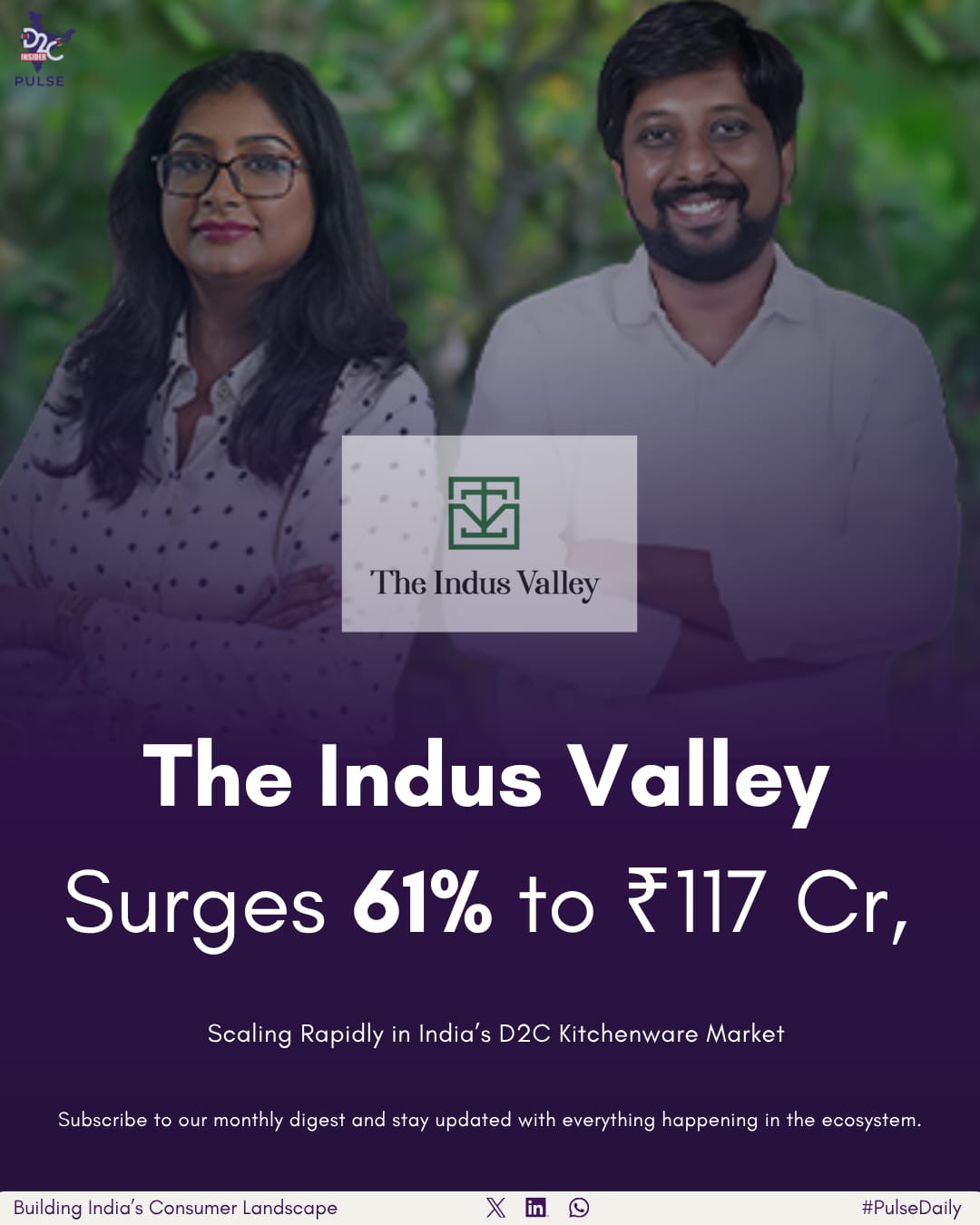
In the latest D2C news India and D2C daily news, Chennai-based kitchenware brand The Indus Valley has reported a strong 61% revenue growth, reaching ₹117 crore in FY25, up from ₹72.5 crore in FY24. This performance highlights the accelerating momentum within the D2C ecosystem India, where purpose-driven brands are scaling rapidly by aligning with evolving consumer preferences and building strong direct-to-consumer India strategies.
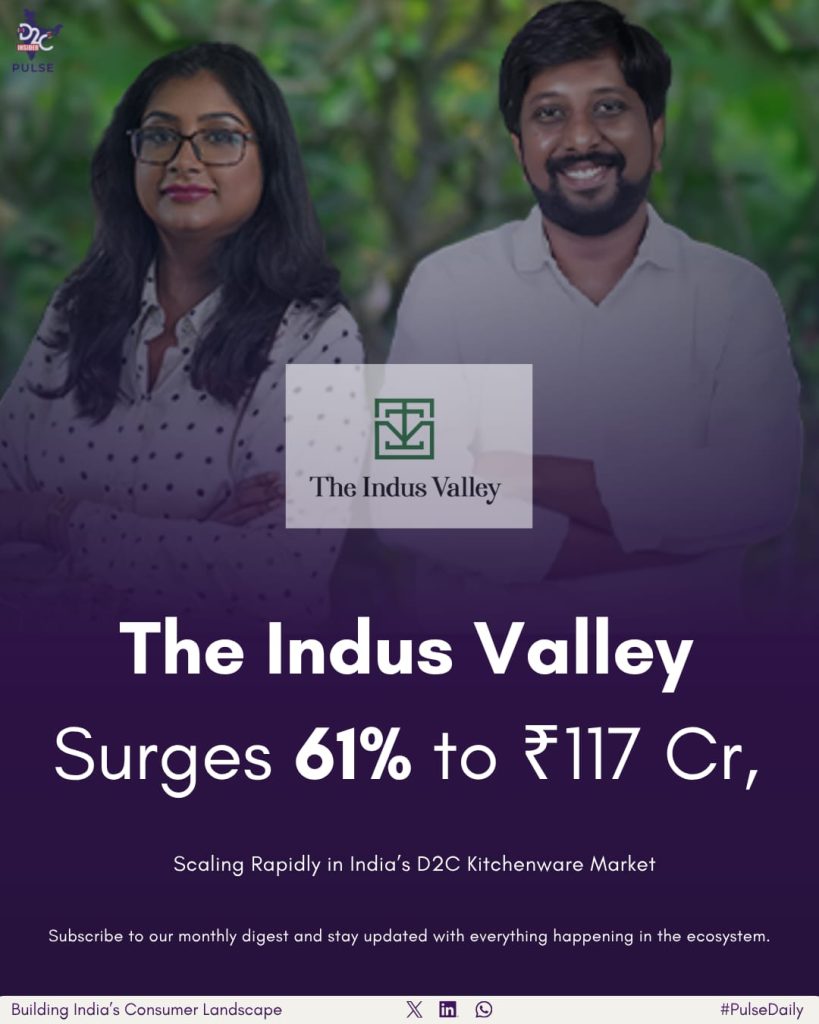
The company’s core operations—focused on kitchenware products—generated ₹114.5 crore in FY25, compared to ₹72 crore in FY24, while an additional ₹2.5 crore came from other income streams. This consistent growth reflects strong D2C revenue growth and positions The Indus Valley among the fastest-growing D2C brands India in the home and kitchen category.
From a D2C business India perspective, the brand’s journey is rooted in a clear value proposition—offering toxin-free, “healthy” kitchenware alternatives to traditional non-stick cookware. Founded in 2016 by Jagadeesh Kumar and Madhumitha Uday Kumar, the company has built a compelling D2C brand building story, emerging from a real-life consumer problem and evolving into a trusted name within D2C consumer behavior India trends.
The brand’s product portfolio spans cast iron, tri-ply stainless steel, sheet iron, and traditional metals like brass, bronze, and copper. This diversified offering aligns with D2C product launches trends, where brands are expanding across categories to meet increasing demand for safe, durable, and premium kitchen solutions. It also positions the company within the broader narrative of sustainable D2C brands and premium D2C brands India.
While scaling rapidly, The Indus Valley has also invested heavily in growth. Total expenditure rose 51% to ₹119 crore in FY25, with significant spends on advertising and selling expenses, which surged 45% to ₹51.3 crore. Employee benefit expenses also increased to ₹11 crore, reflecting investments in team and operations. These numbers highlight a common trend in D2C startup news, where brands prioritize growth and market capture in the early stages.
Despite increased spending, the company reduced its losses by 61% to ₹2.5 crore in FY25, down from ₹6.5 crore in FY24. On a unit economics basis, it improved efficiency by reducing spend per rupee earned to ₹1.04 from ₹1.10. This reflects improving D2C supply chain innovation and operational discipline—key factors driving long-term sustainability in the D2C ecosystem India.
The brand’s growth trajectory aligns with broader D2C market trends 2025, where consumers are actively shifting towards safer, health-conscious products. This also reflects changing D2C consumer behavior India, where awareness around materials, quality, and long-term usage is influencing purchase decisions.
While not directly linked to D2C funding rounds or D2C IPO news, The Indus Valley’s performance contributes to ongoing conversations in D2C investor insights, D2C startup valuation, and private equity in D2C. It stands as an example of how bootstrapped or steadily growing brands can achieve scale through strong fundamentals.
Overall, The Indus Valley’s journey represents what’s happening in India’s D2C space today—brands with clear purpose, strong product-market fit, and operational focus are scaling rapidly. As part of the daily digest of D2C news in India, the company continues to strengthen its position in the D2C ecosystem India, shaping the future of kitchenware and consumer wellness.