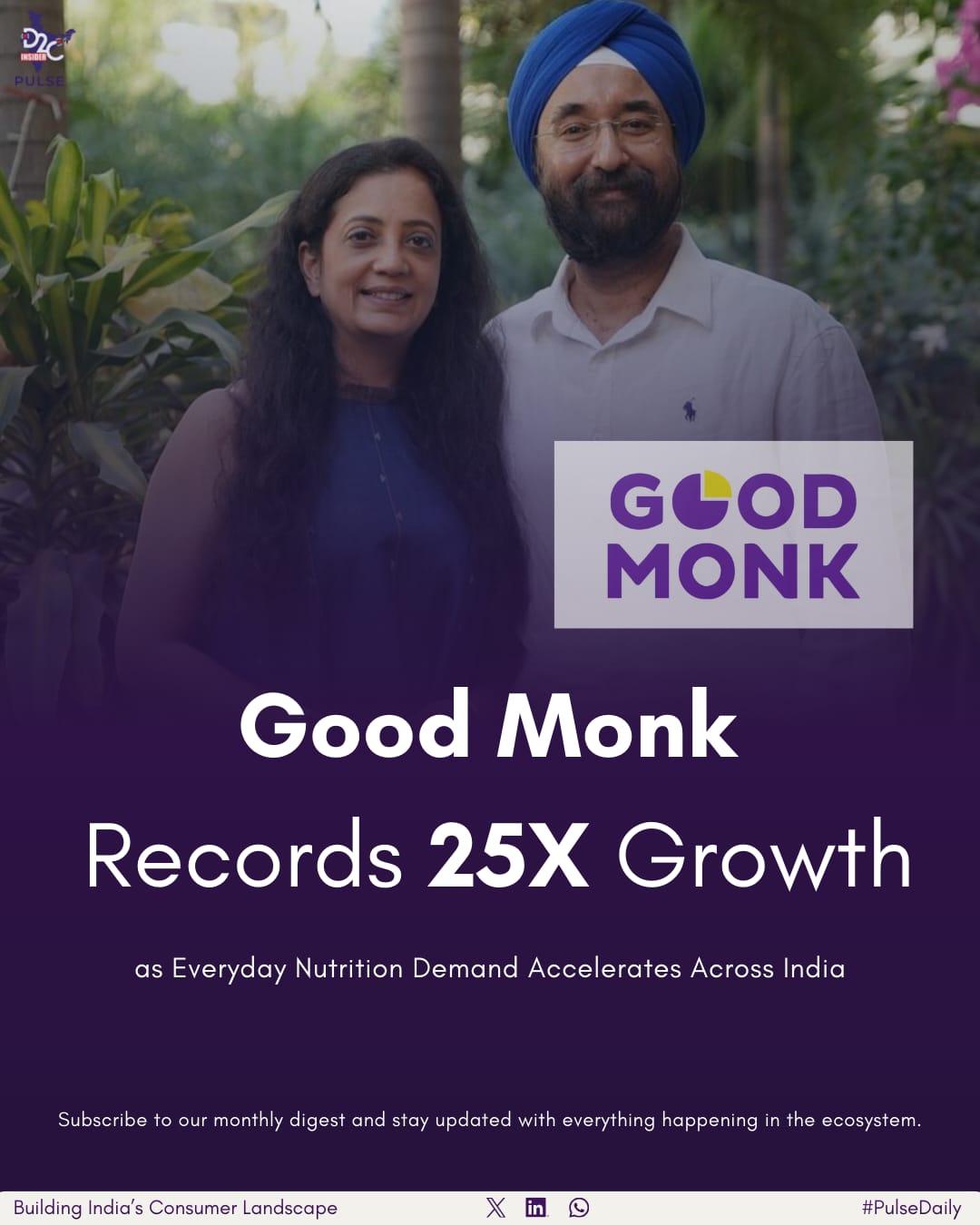
India’s direct-to-consumer nutrition landscape is seeing strong momentum as Good Monk, the flagship brand of Bengaluru-based Superfoods Valley, reported a 25X growth over the last 18 months, emerging as one of the fastest-scaling names in D2C news India and Indian D2C updates. The brand has scaled its monthly revenue from ₹40 lakh to approximately ₹2.5 crore, while also turning CM3 positive, signalling improving unit economics alongside rapid expansion—an important marker of sustainable growth in the D2C ecosystem India.
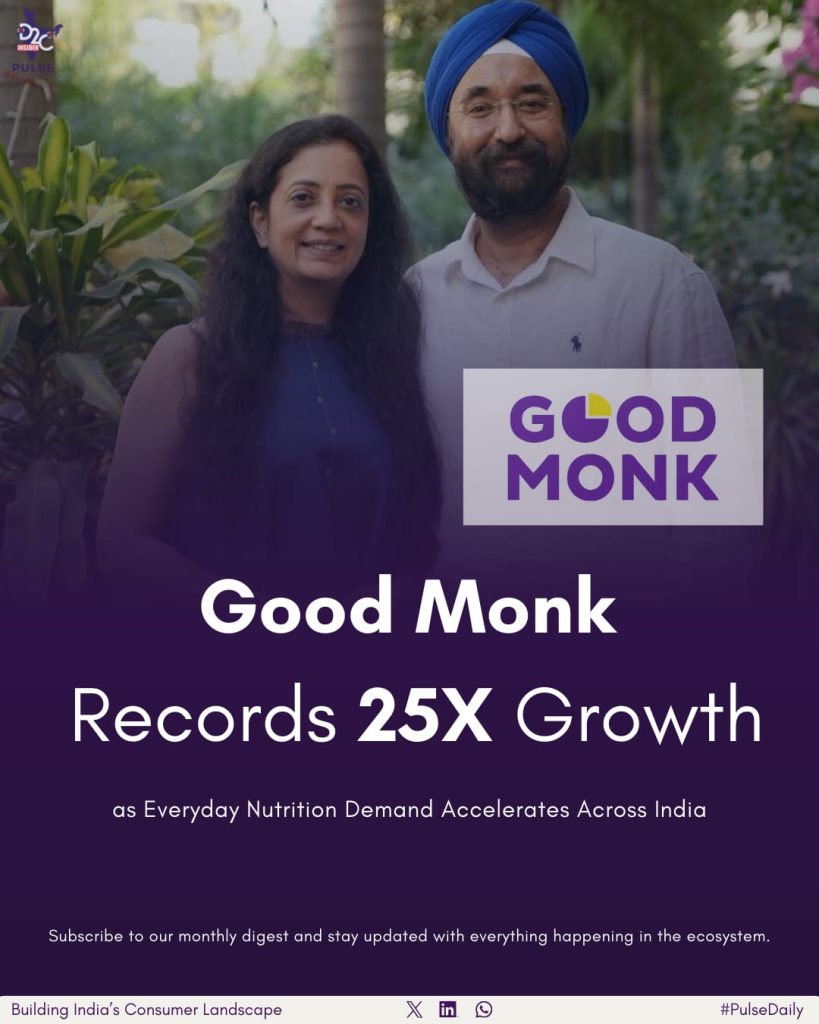
Founded by Amarpreet Singh Anand and Sahiba Kaur, Good Monk was built around a simple but underserved insight in Direct-to-consumer India: while awareness around nutrition is rising, most households struggle to integrate supplements into daily routines. Traditional pills, syrups, and powders often disrupt habits, taste, or convenience. Good Monk addressed this gap by creating clinically tested nutrition products that blend seamlessly into everyday home-cooked meals, without changing taste, texture, or preparation—an approach that has resonated strongly with modern Indian families.
This everyday nutrition model has been the key driver behind the brand’s 25X scale-up. Instead of positioning itself as a typical supplement company, Good Monk operates as a D2C wellness startup focused on fortifying daily meals. This differentiation has led to high repeat consumption, strong word-of-mouth adoption, and improved retention—critical levers for D2C revenue growth and healthier contribution margins. As a result, the company has been able to scale volumes while maintaining discipline on costs, helping it achieve CM3 positivity during its growth phase.
Amarpreet Singh Anand, Founder and CEO, noted that Good Monk’s mission has always been to make nutrition easy, effective, and clean for Indian households. The company’s growth, he said, validates both the consumer problem being solved and the brand’s decision to focus on clinical efficacy alongside scalability. By staying rooted in fundamentals while expanding reach, Good Monk has strengthened its position among latest D2C startups building for long-term impact rather than short-term traction.
Co-founder Sahiba Kaur highlighted that the brand’s origin story is deeply personal, shaped by the founders’ experiences as parents caring for children and elders. That lived context has influenced product development, messaging, and consumer engagement—factors that have contributed to strong trust and loyalty. In an environment where D2C consumer behavior India is increasingly driven by credibility and outcomes, this trust-led approach has become a competitive advantage.
From a market perspective, Good Monk’s rise mirrors broader D2C market trends 2025, particularly within nutrition and preventive health. India’s nutraceutical and wellness segments continue to benefit from rising health awareness, urban lifestyle shifts, and demand for convenience-led solutions. Consumers are increasingly seeking products that fit into daily routines rather than adding friction—making Good Monk’s model especially relevant.
Distribution has also played a key role in the brand’s expansion. Good Monk currently sells through its own website and major e-commerce platforms such as Amazon and Flipkart, strengthening its omnichannel D2C strategy. As part of its next phase of D2C expansion plans, the company is preparing to move beyond metro markets into Tier II cities and emerging consumption centres, where awareness of preventive nutrition is rising rapidly.
While the company has not disclosed recent D2C funding news, its performance places it firmly on the radar of investors tracking fastest-growing D2C brands and scalable wellness platforms. The focus on unit economics, repeat consumption, and clinically backed products aligns closely with what VC-backed D2C brands and long-term capital are increasingly prioritising.
As competition intensifies across D2C wellness startups and nutrition brands, Good Monk’s ability to combine simplicity, science, and everyday relevance positions it well for sustained growth. With a clear product-market fit, improving margins, and plans to deepen its national footprint, the brand is shaping up as a strong example of how D2C business India can scale responsibly—by solving real household problems and embedding nutrition into daily life.