
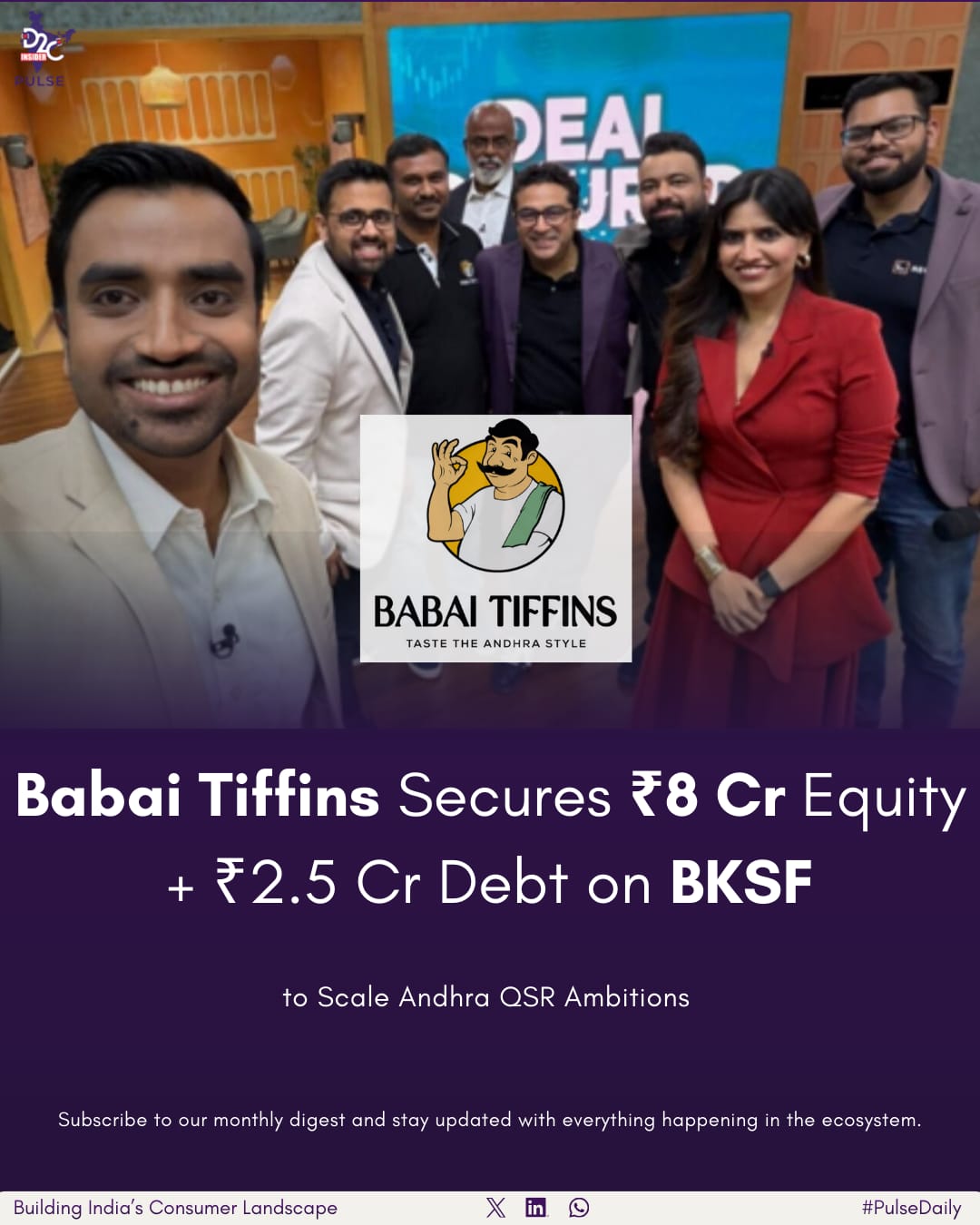
Andhra-based quick service restaurant (QSR) brand Babai Tiffins LLP has secured ₹8 crore for 10% equity along with ₹2.5 crore in venture debt after appearing on Bharat Ke Super Founders (BKSF), marking a strong validation moment for regional food brands in India’s fast-evolving D2C ecosystem India. The funding positions Babai Tiffins among the most notable names in recent D2C startup news and underlines growing investor interest in scalable, culture-first food businesses.
Founded in 2021 by Ravi Morampudi and Shriram Babai, Babai Tiffins is building an organised QSR chain centred on authentic vegetarian Andhra-style cuisine. The brand has positioned itself as “the Rameshwaram Cafe for Andhra food”—a comparison that reflects its ambition to standardise regional flavours while maintaining speed, affordability, and consistency. This approach resonates strongly with current D2C market trends 2025, where consumers increasingly favour familiar, everyday meals delivered through reliable, branded formats.
Currently, Babai Tiffins operates three outlets in Bengaluru and plans to expand to six locations over the next 18 months, with a clear focus on high-footfall
neighbourhoods and repeat consumption. The fresh capital will be used to strengthen backend operations, kitchen infrastructure, and supply-chain systems, while also enabling measured physical expansion—key pillars for sustainable D2C expansion plans in the food and beverage segment.
The venture debt component of the round was backed by Recur Club, reflecting a growing trend where early-stage D2C brands India combine equity with structured debt to optimise capital efficiency. This blended funding strategy allows Babai Tiffins to scale without excessive dilution, supporting long-term D2C revenue growth and operational discipline.
Babai Tiffins’ core strength lies in its focus on everyday Andhra meals designed for repeat consumption rather than occasional indulgence. By anchoring its menu around familiar staples and breakfast-led formats, the brand taps into a massive opportunity within India’s ₹4+ lakh crore food services market, where regional cuisines remain under-penetrated in organised QSR formats. This positions Babai Tiffins well within Latest D2C startups that are solving for scale through cultural relevance rather than novelty alone.
From a direct-to-consumer India perspective, the brand’s QSR model functions as a physical D2C touchpoint—owning customer experience end-to-end, controlling quality, and building brand recall through consistency. As organised QSR brands increasingly explore omnichannel strategies, Babai Tiffins is also evaluating adjacent growth levers, including packaged foods inspired by Andhra households, which could extend the brand beyond restaurants into Indian kitchens.
The funding milestone comes at a time when Indian D2C updates show a clear shift toward profitability, unit economics, and scalable regional plays. Investors are backing brands that combine strong cultural identity with system-driven execution, and Babai Tiffins fits squarely into this narrative.
Looking ahead, the brand’s roadmap includes disciplined outlet expansion, deeper penetration in Bengaluru, and eventual entry into other metro markets with large Andhra consumer bases. By staying focused on operational rigour, affordability, and flavour authenticity, Babai Tiffins aims to build a durable QSR brand that can scale nationally while retaining its regional soul.
In a crowded D2C industry news landscape, Babai Tiffins stands out as a compelling example of how regional cuisine, when paired with modern QSR systems, can unlock large-scale opportunities—making it a brand to watch as India’s organised food and D2C business India ecosystem continues to mature.