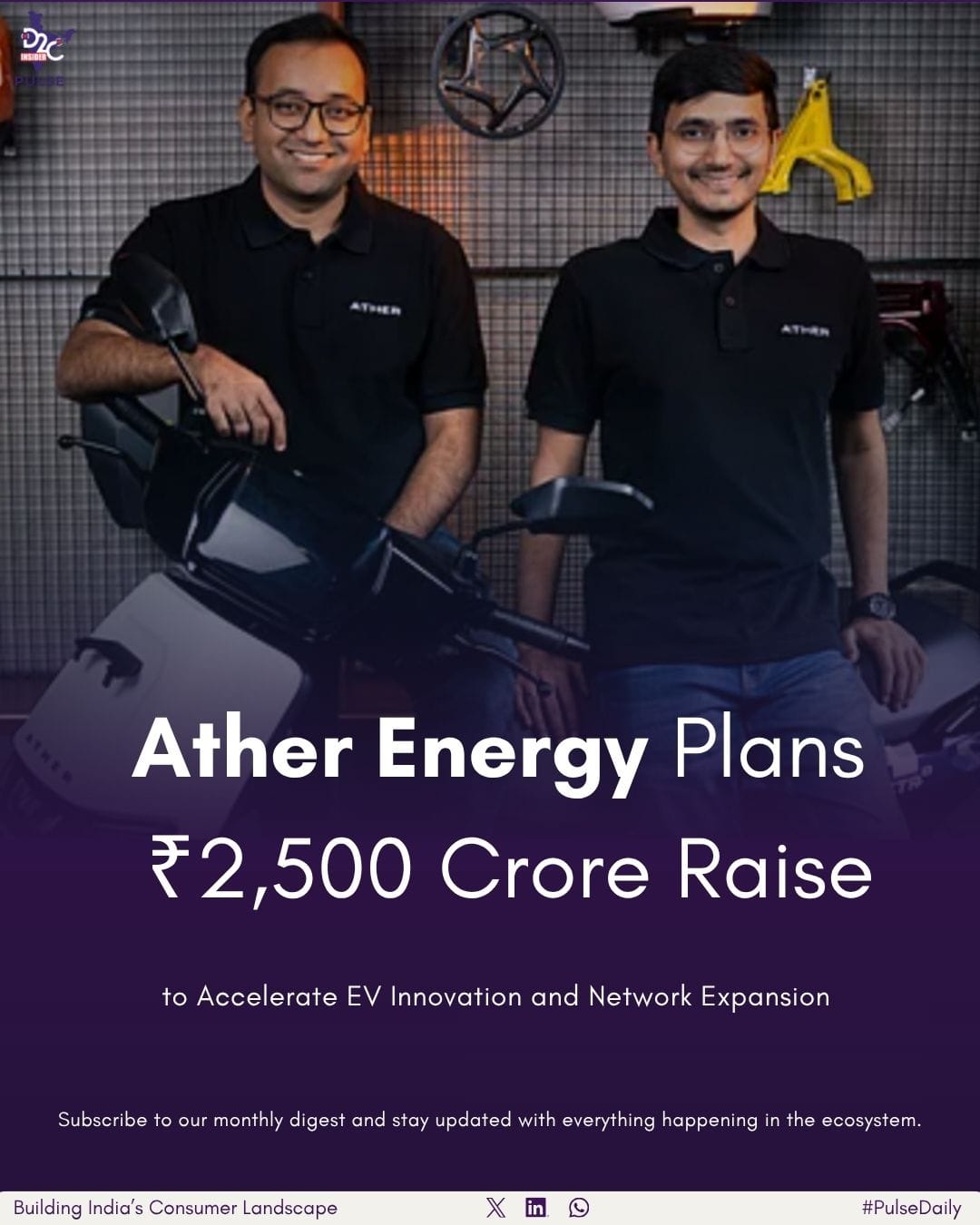
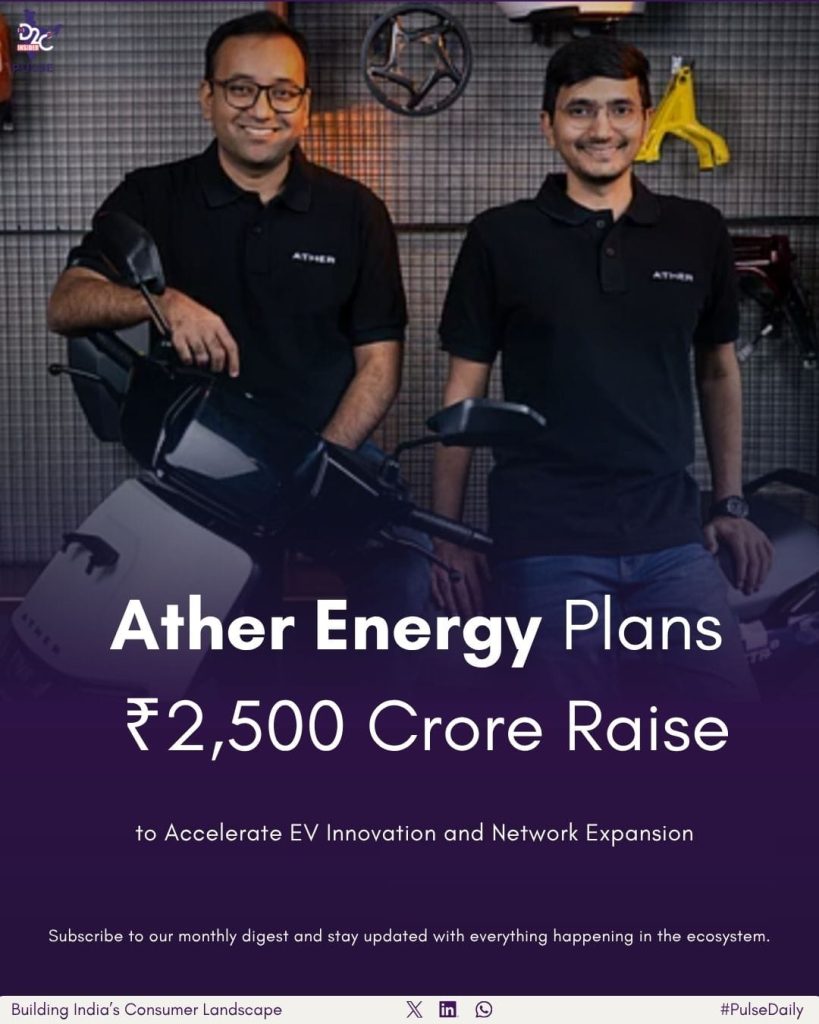
Ather Energy is gearing up for its next phase of growth after receiving board approval to raise up to ₹2,500 crore through a combination of qualified institutional placement (QIP) and other equity-linked instruments. The move marks one of the most significant developments in recent D2C funding news and startup ecosystem updates, reinforcing investor confidence in India’s rapidly evolving electric mobility sector.
According to the approved plan, Ather Energy will raise up to ₹1,500 crore through a QIP, while the remaining ₹1,000 crore may be raised through a preferential issue, rights issue, equity shares, or foreign currency convertible bonds. The proposed fundraise comes at a crucial stage for the company as it accelerates investments across manufacturing, product innovation, distribution, and customer experience.
The announcement highlights the continued momentum within India’s D2C ecosystem India, where technology-led consumer brands are increasingly attracting capital to fuel long-term growth. While Ather operates in the electric vehicle sector, its direct consumer engagement model, extensive retail footprint, and strong brand positioning place it among the most closely watched growth stories in India’s new-age consumer landscape.
The timing of the fundraise is supported by Ather’s strong financial performance. In Q4 FY26, the company reduced its net loss by 57.2% year-on-year to ₹100.2 crore from ₹234.4 crore in the corresponding period last year. Operating revenue surged 73.7% year-on-year to ₹1,174.7 crore, reflecting strong consumer demand and improving operational efficiency. Such D2C revenue growth trends continue to attract investor attention across India’s broader startup ecosystem.
Beyond financial performance, Ather has significantly expanded its physical presence across the country. The company doubled its retail network during FY26, growing from 351 experience centres to more than 700. Its service network expanded to 548 centres, while its EV charging infrastructure crossed 6,000 charging points nationwide. These investments reflect a strong omnichannel D2C strategy that combines product innovation with customer accessibility and service reliability.
The company’s aggressive expansion plans align with broader D2C market trends 2025, where brands are increasingly investing in infrastructure, technology, and customer acquisition to strengthen market leadership. As competition intensifies across the electric two-wheeler market, Ather continues to differentiate itself through premium positioning, product quality, and an integrated ownership experience.
Investor confidence in the company remains strong. Following its improved financial performance and expansion milestones, leading brokerages have maintained positive outlooks on the stock. Market observers continue to view Ather as one of India’s strongest EV growth stories, supported by robust execution capabilities and increasing scale.
The fundraise is expected to help accelerate product development, manufacturing capacity expansion, technology innovation, and distribution growth. It will also strengthen the company’s ability to compete effectively as the Indian electric mobility market enters its next stage of adoption.
Ather’s journey reflects many of the themes shaping India’s startup landscape today—strong consumer demand, rapid network expansion, improving financial performance, and sustained investor confidence. As D2C startup news, D2C funding rounds, and growth-focused businesses continue to dominate industry conversations, Ather’s latest move demonstrates how category leaders are positioning themselves for long-term scale.
With ₹2,500 crore in fresh capital planned, expanding infrastructure, improving profitability metrics, and growing consumer adoption of electric mobility, Ather Energy appears well-positioned to strengthen its leadership in India’s EV sector while building one of the country’s most influential consumer technology businesses. The proposed fundraise represents not just capital raising, but a strategic step toward accelerating innovation, market expansion, and sustainable long-term growth.