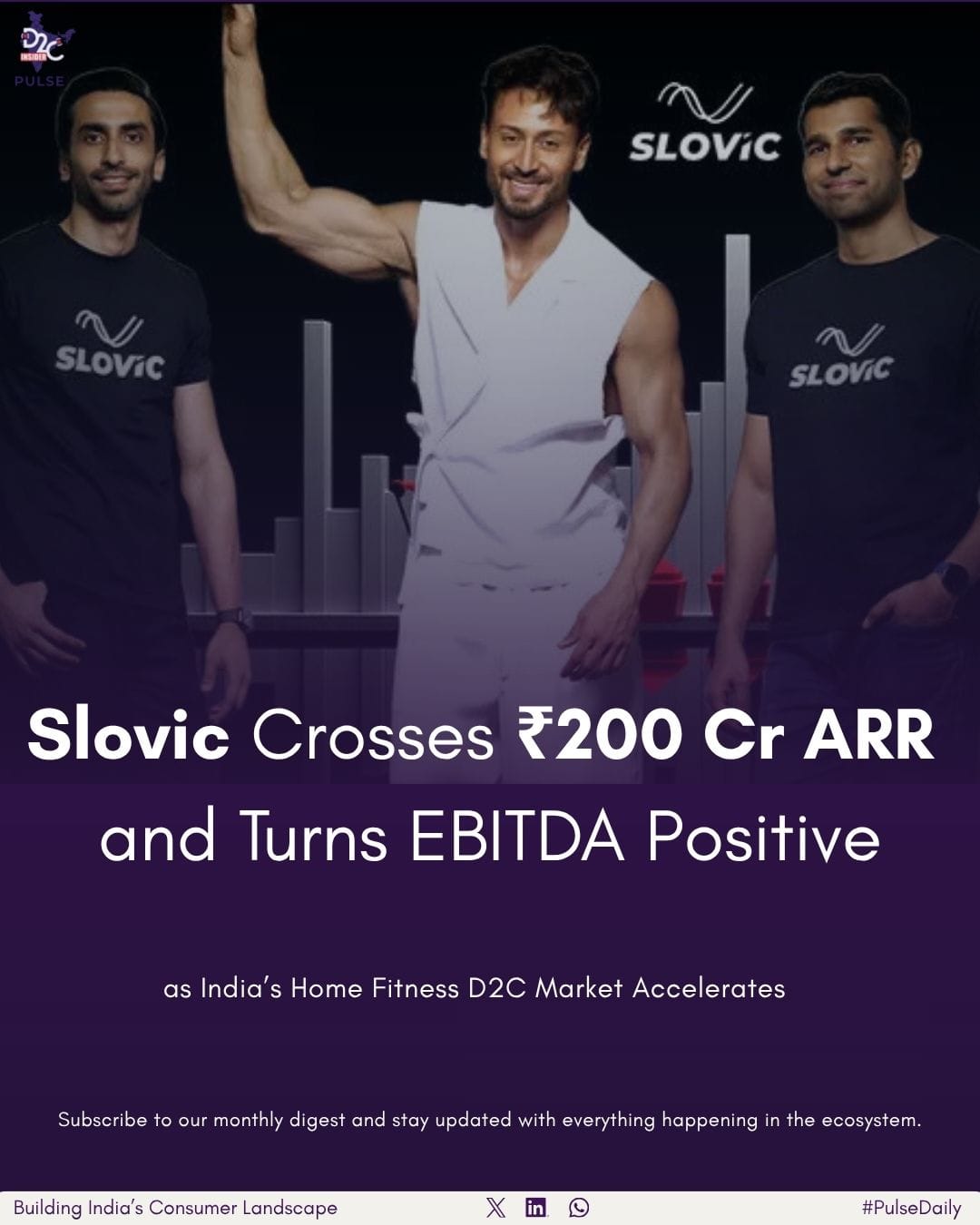
In one of the strongest D2C startup news developments emerging from India’s rapidly growing fitness and wellness sector, sports and fitness gear brand Slovic has crossed ₹200 crore in annualised recurring revenue (ARR) while turning EBITDA positive in April 2026. Backed by rising demand for home workout equipment, strong omnichannel growth, and improving brand recall, the D2C fitness startup is rapidly strengthening its position within India’s expanding home fitness and wellness ecosystem.
Founded by Aqib Mohammed and Shashwat Diesh, Slovic has emerged as one of the fastest-growing D2C brands India operating within the affordable fitness equipment category. The company has built significant momentum through products such as dumbbells, resistance bands, pull-up bars, and home workout accessories, categories that continue witnessing rising demand across both metro and non-metro markets.
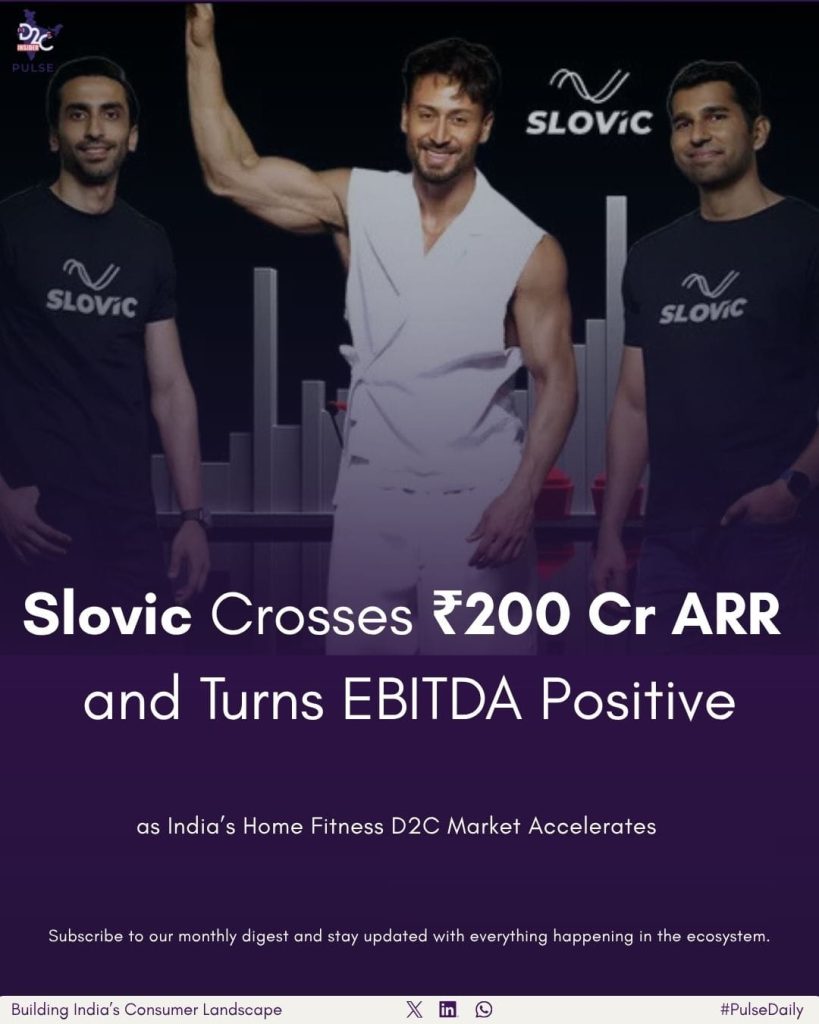
According to Shashwat Diesh, founder of Powerhouse91 which owns Slovic, the company has achieved nearly 250% CAGR growth over the last two years. Slovic’s revenue reportedly increased from ₹30 crore in FY25 to ₹92 crore in FY26, while current ARR has now reached approximately ₹225 crore.
Within today’s D2C ecosystem India and Indian D2C updates landscape, Slovic’s growth reflects broader D2C market trends 2025 where consumers are increasingly prioritising fitness, preventive wellness, and at-home exercise solutions. The pandemic-era shift toward home workouts has evolved into a long-term lifestyle trend, creating significant opportunities for D2C wellness startups and sports-focused consumer brands.
Importantly, Slovic has managed to achieve strong scale while maintaining disciplined capital efficiency. The company has raised around ₹28 crore in equity funding so far, backed by investors including Titan Capital, Haresh Chawla, FJ Labs, Crossbeam Venture Partners, and Mamaearth co-founder Varun Alagh. Despite growing investor interest, the company stated that fresh fundraising is not currently an immediate priority due to improving profitability and healthy business fundamentals.
The company’s EBITDA-positive milestone is particularly significant within the D2C industry news ecosystem, where sustainable growth and operational efficiency are increasingly becoming major investor priorities. According to co-founder Aqib Mohammed, Slovic’s improving profitability has been supported by rising organic demand and stronger customer acquisition efficiency.
The company reported that branded searches for Slovic have increased nearly 8X over the last six months, reflecting rapidly improving consumer awareness and brand recall. Across D2C business India, rising organic discovery and repeat demand are becoming increasingly critical growth drivers as brands look to optimise marketing costs and strengthen long-term retention.
Slovic currently derives nearly 45% of its revenue each from ecommerce marketplaces and quick commerce D2C platforms, while the remaining sales come through its direct-to-consumer India website. This balanced omnichannel D2C strategy highlights how fastest-growing D2C brands are leveraging marketplaces, quick commerce, and owned digital channels simultaneously to maximise consumer reach.
Alongside financial growth, Slovic has also accelerated brand-building initiatives through celebrity-led marketing. The company recently partnered with actor Tiger Shroff as brand ambassador for its “Gym Ghar Lao” campaign, aimed at strengthening its positioning within India’s rapidly expanding home fitness category. This also reflects broader influencer marketing for D2C and celebrity-backed D2C startups trends shaping India’s modern consumer ecosystem.
The company’s rapid scale-up comes amid increasing competition across India’s fitness and sports equipment segment, where brands such as Decathlon, Cultsport, Boldfit, and multiple low-cost sellers continue competing aggressively across pricing, distribution, and product innovation. However, Slovic believes improving consumer trust, stronger brand recognition, and repeat purchases are helping the company build sustainable long-term growth.
As India’s D2C ecosystem continues evolving rapidly, Slovic is emerging as one of the strongest examples of how category-focused fitness brands can scale through capital-efficient operations, omnichannel distribution, quick commerce integration, and strong community-led brand building. With rising wellness awareness, growing fitness adoption, and expanding home workout demand, Slovic is positioning itself at the centre of India’s next-generation consumer wellness revolution.