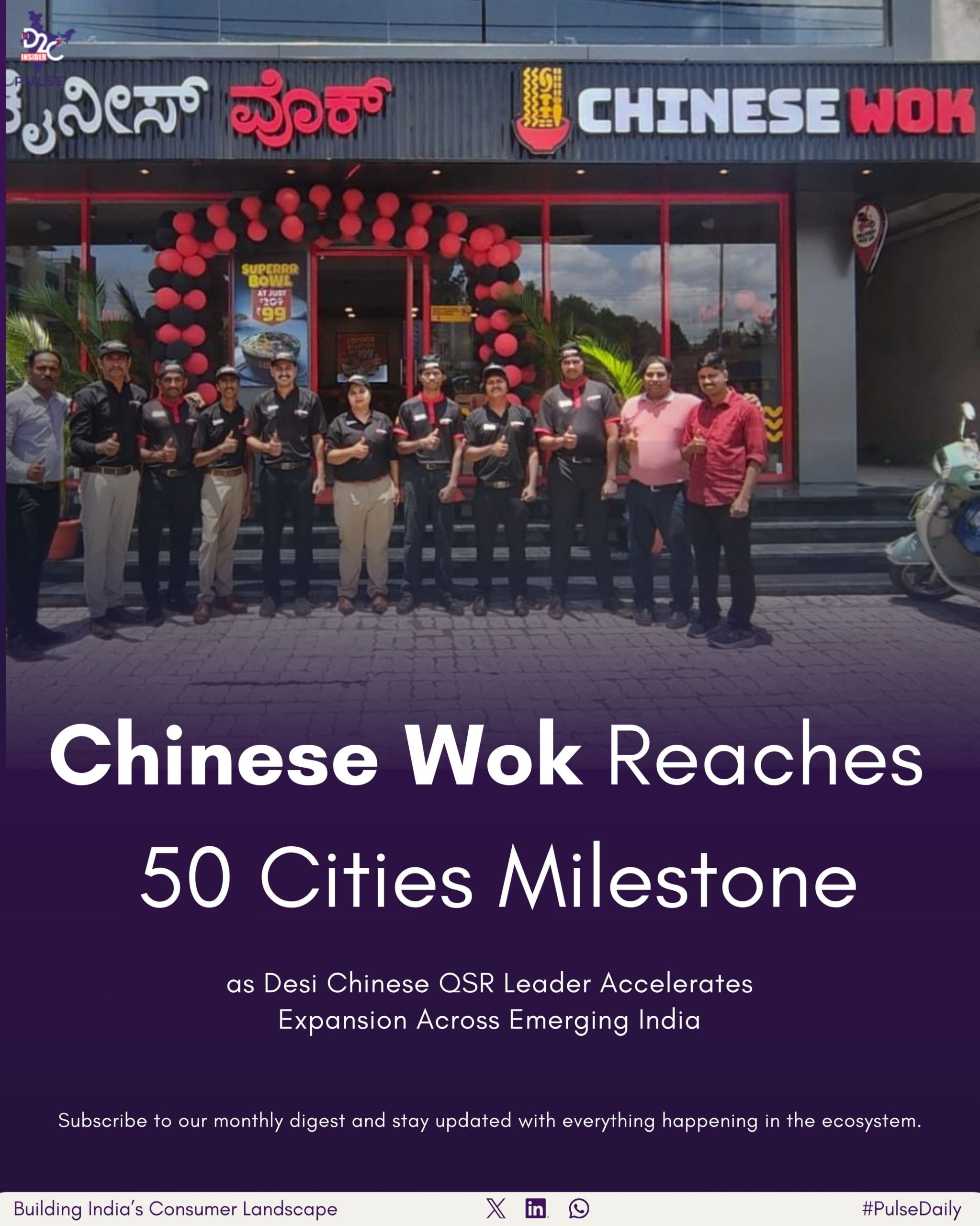
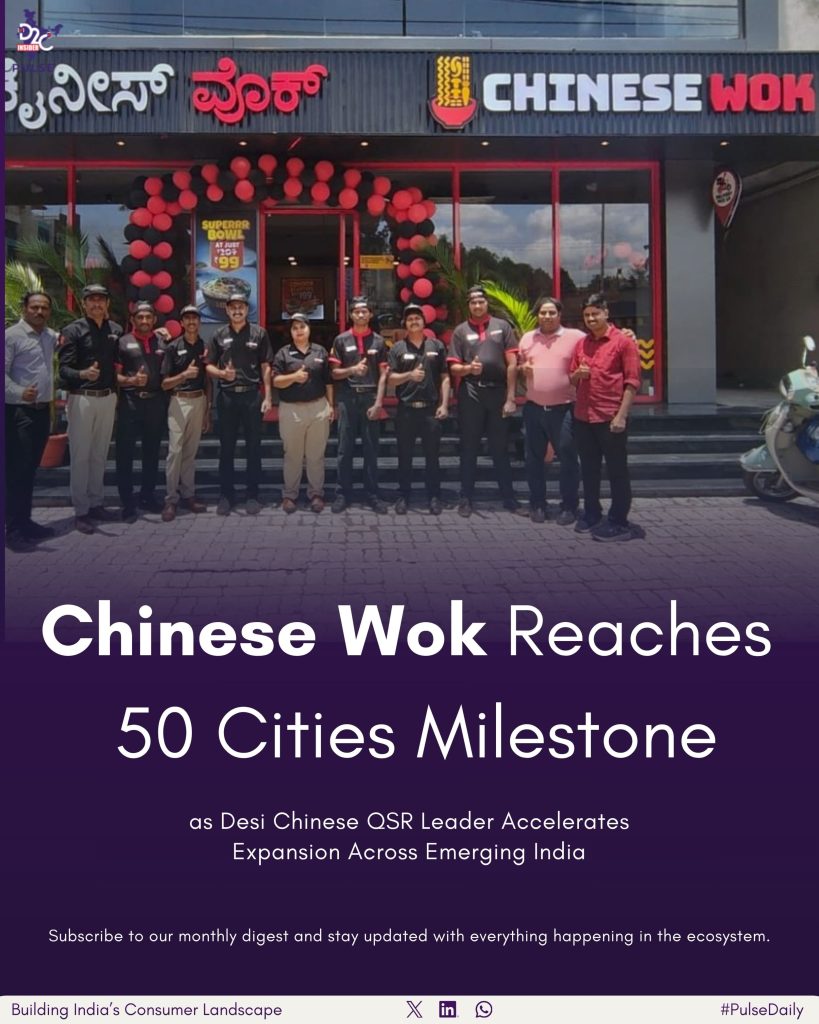
Chinese Wok has achieved a significant milestone in its growth journey, marking its entry into its 50th city in India with the launch of a new outlet in Belagavi, Karnataka. The expansion reinforces the brand’s position as one of the fastest-growing food and beverage brands in the country and highlights the continued momentum of India’s evolving D2C ecosystem. As D2C brands India continue to scale through omnichannel expansion and deeper regional penetration, Chinese Wok’s latest move reflects the growing demand for organized quick-service restaurant formats across emerging markets.
The new Belagavi outlet strengthens Chinese Wok’s presence in South India, taking its regional network to 89 outlets while expanding its Karnataka footprint to 38 stores. The milestone is particularly noteworthy in the context of D2C business India, where brands are increasingly looking beyond metropolitan markets and focusing on Tier-II and Tier-III cities to unlock the next phase of growth.
Over the past decade, Chinese Wok has transformed from a single-city operation into a nationally recognized quick-service restaurant chain operating across 50 cities. This remarkable expansion story stands out among D2C brand building stories and demonstrates how strong execution, consumer understanding, and a scalable business model can create category leadership. The company’s growth strategy is rooted in a disciplined cluster-based expansion approach, allowing it to build operational efficiency while maintaining a consistent consumer experience across locations.
Belagavi represents an attractive market for the company due to rising consumer spending, increasing demand for affordable dining experiences, and growing acceptance of organized food service brands. These trends align closely with broader D2C market trends 2025, where consumers across India are seeking quality, convenience, affordability, and trusted brands. As consumer behavior India continues to evolve, food and beverage companies are discovering significant opportunities beyond traditional urban centers.
Chinese Wok’s success also highlights the strength of omnichannel D2C strategy in today’s competitive landscape. While physical stores remain central to the customer experience, brands are increasingly integrating dine-in, takeaway, delivery, and digital engagement to create stronger consumer connections. This approach has become a key driver of growth across many D2C food and beverage brands and contributes to stronger customer retention and brand loyalty.
The newly launched outlet follows the brand’s successful high-street format and will serve both dine-in and takeaway consumers. Customers will have access to some of Chinese Wok’s most popular offerings, including Hakka Noodles, Kurkure Momos, Value Woks, Cheese and Schezwan Fries, and a variety of meal combinations that have helped define the brand’s identity in the Desi Chinese category.
The milestone comes at a time when Indian D2C updates increasingly showcase brands scaling aggressively through regional expansion rather than focusing solely on major metros. As D2C industry news continues to highlight the emergence of strong regional consumption hubs, companies with proven business models and efficient operations are well-positioned to benefit from this shift.
Chinese Wok’s expansion into its 50th city reflects more than just store growth—it represents the strengthening of a category that has witnessed widespread consumer adoption across India. With 89 outlets in South India, 38 stores in Karnataka, and a presence spanning 50 cities nationwide, the company continues to build one of the strongest growth stories in India’s organized food service sector.
As D2C brands scaling in 2025 continue to prioritize accessibility, affordability, and innovation, Chinese Wok appears well-positioned to capitalize on rising demand and deepen its leadership in the Desi Chinese quick-service restaurant market. The company’s continued focus on emerging markets, consumer-centric innovation, and disciplined expansion makes it one of the notable growth stories within India’s dynamic D2C ecosystem.