
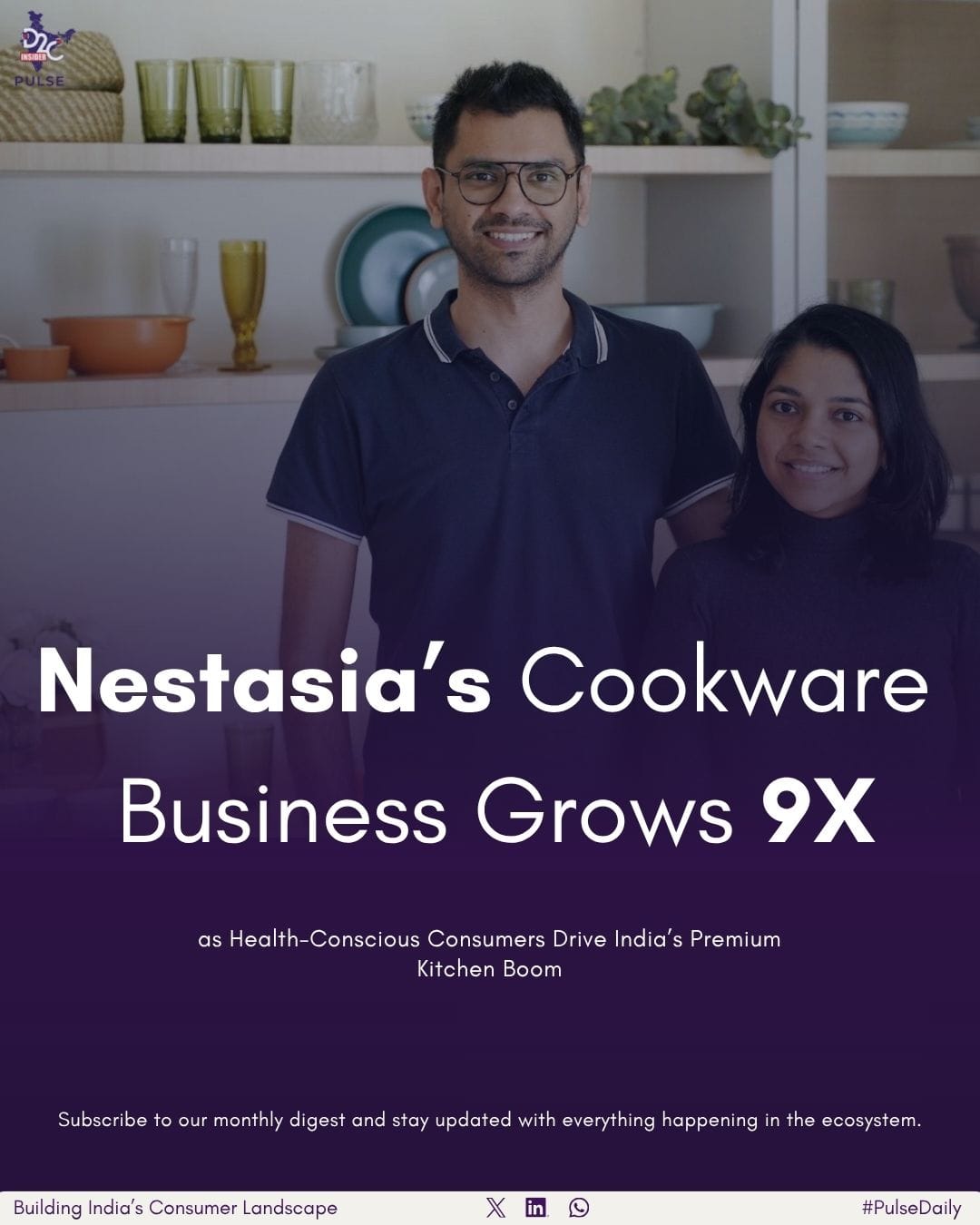
India’s premium kitchenware and home solutions market is witnessing a major consumer shift, and D2C brand Nestasia is emerging as one of the strongest beneficiaries of this growing trend. In one of the latest Indian D2C updates shaping the home and lifestyle segment, Nestasia said its cookware business has grown 9x over the last two years, driven by rising demand for healthier, non-toxic, and premium cookware products across urban Indian households.
The sharp rise highlights how India’s D2C ecosystem is rapidly evolving beyond convenience-driven purchases into wellness-led consumer behaviour. Across D2C news India and D2C industry news, brands focused on premiumisation, health-conscious living, and design-led functionality are increasingly seeing strong consumer traction.
Nestasia said categories such as tri-ply cookware, cast iron cookware, honeycomb cookware, and borosilicate glass cookware are witnessing especially strong growth. The company added that Indian consumers are increasingly moving away from conventional aluminium and traditional coated non-stick cookware toward products positioned as safer, longer-lasting, aesthetically superior, and better suited for modern lifestyles.
“Health is the single most important motivator for consumers in this category,” said Aditi Murarka Agarwal. “The non-toxic nature of cookware, along with naturally non-stick options like cast iron and stainless steel, is seeing significant traction.”
The trend reflects broader D2C market trends 2025 where wellness, sustainability, premium home experiences, and functional design are becoming central to consumer purchase decisions. Across Direct-to-consumer India, home and lifestyle brands are increasingly integrating health-focused messaging, premium materials, and lifestyle positioning into their D2C go-to-market strategy.
According to the company, cookware audiences across its social media ecosystem are showing a 59% affinity toward “non-toxic” and “chemical-free” positioning, highlighting the growing influence of wellness-driven consumer behaviour India. Industry executives say cookware is no longer viewed purely as a utility purchase but is now evolving into a lifestyle and wellness category, particularly among younger urban consumers upgrading kitchens and homes.
Among the fastest-growing segments for the brand is tri-ply cookware, which combines stainless steel layers with an aluminium core to improve durability and heat conductivity. Honeycomb cookware is also seeing strong adoption due to its embossed design structure that reduces food sticking while minimizing coated surfaces. Meanwhile, borosilicate glass cookware continues gaining popularity for its ability to transition seamlessly from cooking to serving while offering premium visual appeal.
The company also said cookware buying behaviour is increasingly being shaped by lifestyle-driven consumption patterns such as cook-and-serve formats, one-pot meals, aesthetic dining experiences, and modern hosting trends including potluck-style gatherings.
“Consumers today are increasingly willing to pay more for healthier cookware options, with health emerging as the primary driver for switching or upgrading,” Agarwal added. “When functionality is paired with thoughtful design, consumers are willing to pay a premium for that added value.”
The rapid growth of Nestasia’s cookware business also reflects larger D2C business India trends where premium D2C brands India are increasingly building strong omnichannel consumer ecosystems across ecommerce, social commerce, influencer-led discovery, and lifestyle-driven digital storytelling.
Across India’s D2C market news and insights, the premium kitchen and home category is emerging as one of the fastest-growing consumer sectors, supported by rising disposable incomes, evolving urban lifestyles, wellness awareness, and demand for aesthetically designed everyday products.
As India’s D2C ecosystem India continues scaling rapidly, brands like Nestasia are showing how product innovation, wellness-focused positioning, premiumisation, and design-first experiences can drive long-term consumer loyalty and category expansion.
The latest growth milestone further strengthens conversations around D2C brand building stories, premium home consumption, and India’s evolving lifestyle economy — where consumers are increasingly investing in products that combine health, durability, functionality, and modern living experiences.