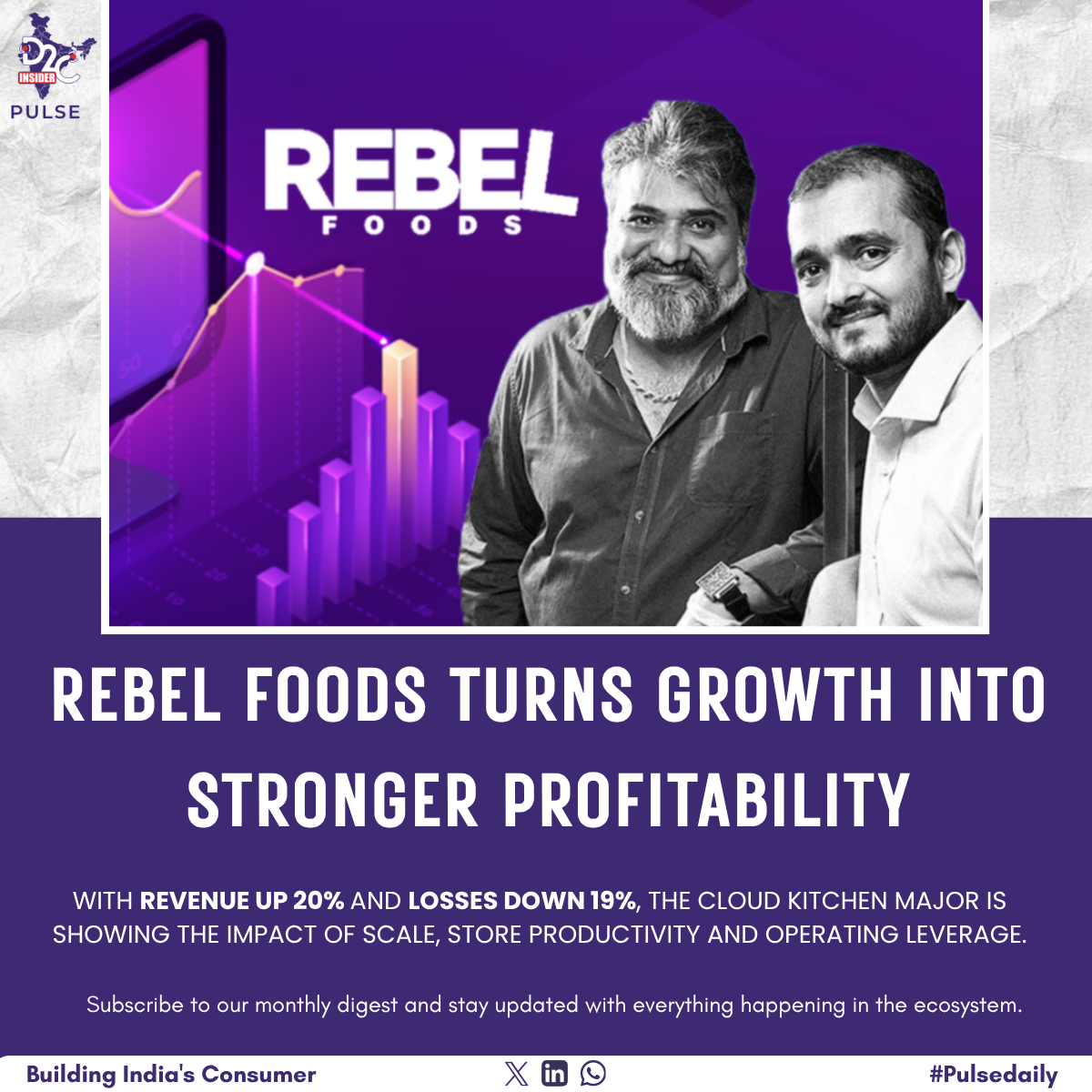
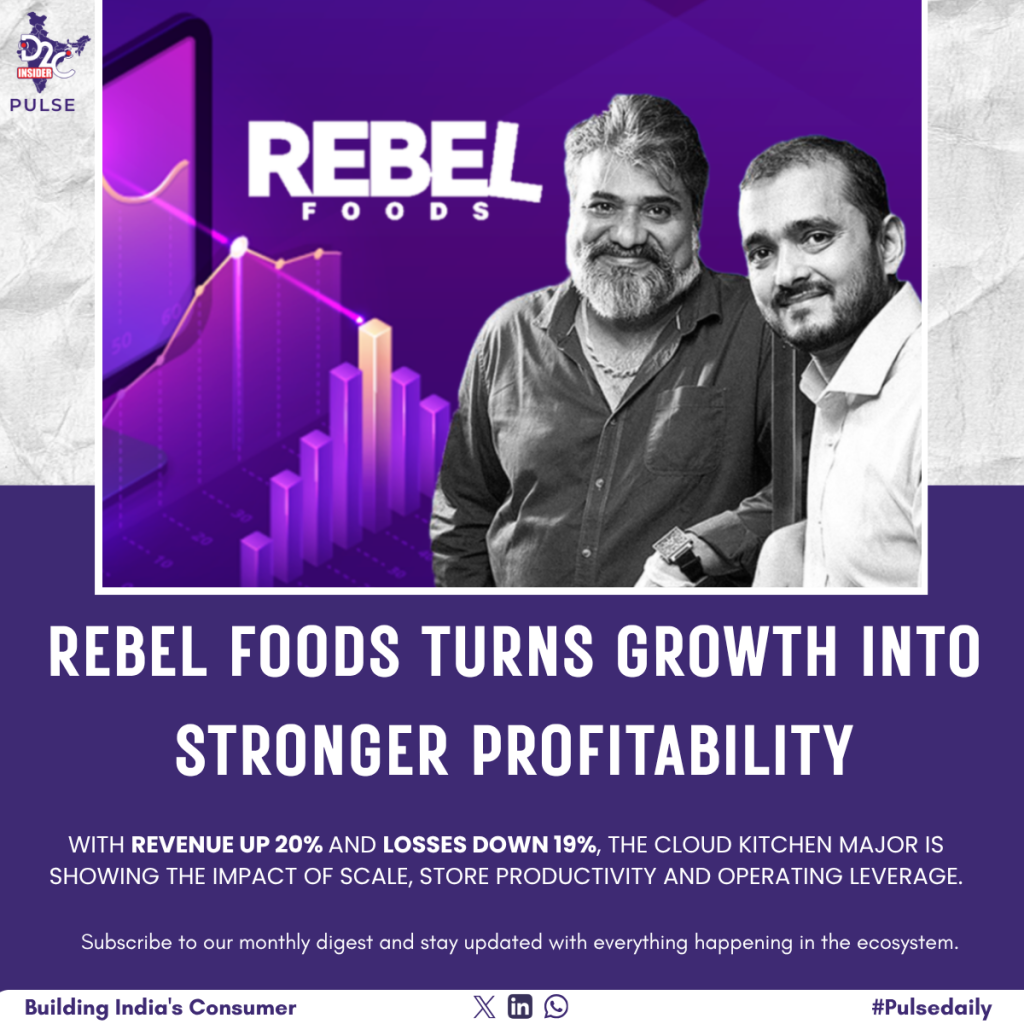
Rebel Foods closed FY26 with revenue up 20% year-on-year, its EBITDA margin improved by 475 basis points, and its net loss cut by 19% — the clearest signal yet that India’s largest cloud kitchen operator is converting scale into discipline rather than just growth for its own sake.
The company, which runs Faasos, Behrouz Biryani, Oven Story Pizza, The Good Bowl, and Sweet Truth alongside India’s Wendy’s franchise and more than 39 other brands, now operates upwards of 450 kitchens across 85-plus cities, with a footprint that stretches beyond India into the UAE and the UK. That geographic spread has historically made Rebel Foods a proxy for the health of India’s broader cloud-kitchen category — a category that spent much of the last few years being asked hard questions about whether multi-brand kitchens could ever turn genuinely profitable.
This year’s numbers are the company’s answer. Co-founder and Global CEO Ankush Grover credited the improvement to “stronger consumer engagement, higher store productivity, and operating leverage,” pointing to gains in store operations, technology, and supply chain efficiency rather than any single blockbuster brand or category. That distinction matters: a 20% revenue jump built on operating leverage tends to be more durable than one built on discount-driven order volume, and a near-500-basis-point EBITDA improvement is the kind of number that shows up in due diligence decks, not just press releases.
It also matters for the timing. Rebel Foods has spent years positioning itself as a future IPO candidate, and improving unit economics — narrower losses, fatter margins, steadier growth — is precisely the track record public-market investors will want to see before that conversation gets serious. Every basis point of margin improvement this year is effectively pre-work for that eventual listing.
For India’s broader cloud kitchen and multi-brand food-delivery ecosystem, Rebel Foods’ FY26 print carries weight beyond its own balance sheet. The category has been through a rough stretch of consolidation, shutdowns, and investor skepticism about whether “house of brands” food models can ever scale to real profitability. A 20% growth year paired with real margin gains, from the sector’s biggest player, is the kind of result that gives the rest of the category room to make its own case to investors — and gives founders building the next generation of India’s D2C food brands a working playbook for what disciplined scale actually looks like.
Source: Based on company-reported FY26 financials, with additional editorial adaptation and analysis.