For India’s digital-first beauty brands, the next phase of growth is increasingly taking shape beyond e-commerce. As consumers discover products through social media, marketplaces and online reviews, neighbourhood stores, beauty retailers and pharmacies continue to play an important role in where they ultimately make purchases. The opportunity, however, is not simply to get products onto more shelves. Brands must ensure that distribution translates into consumer demand, repeat purchases and profitable growth.
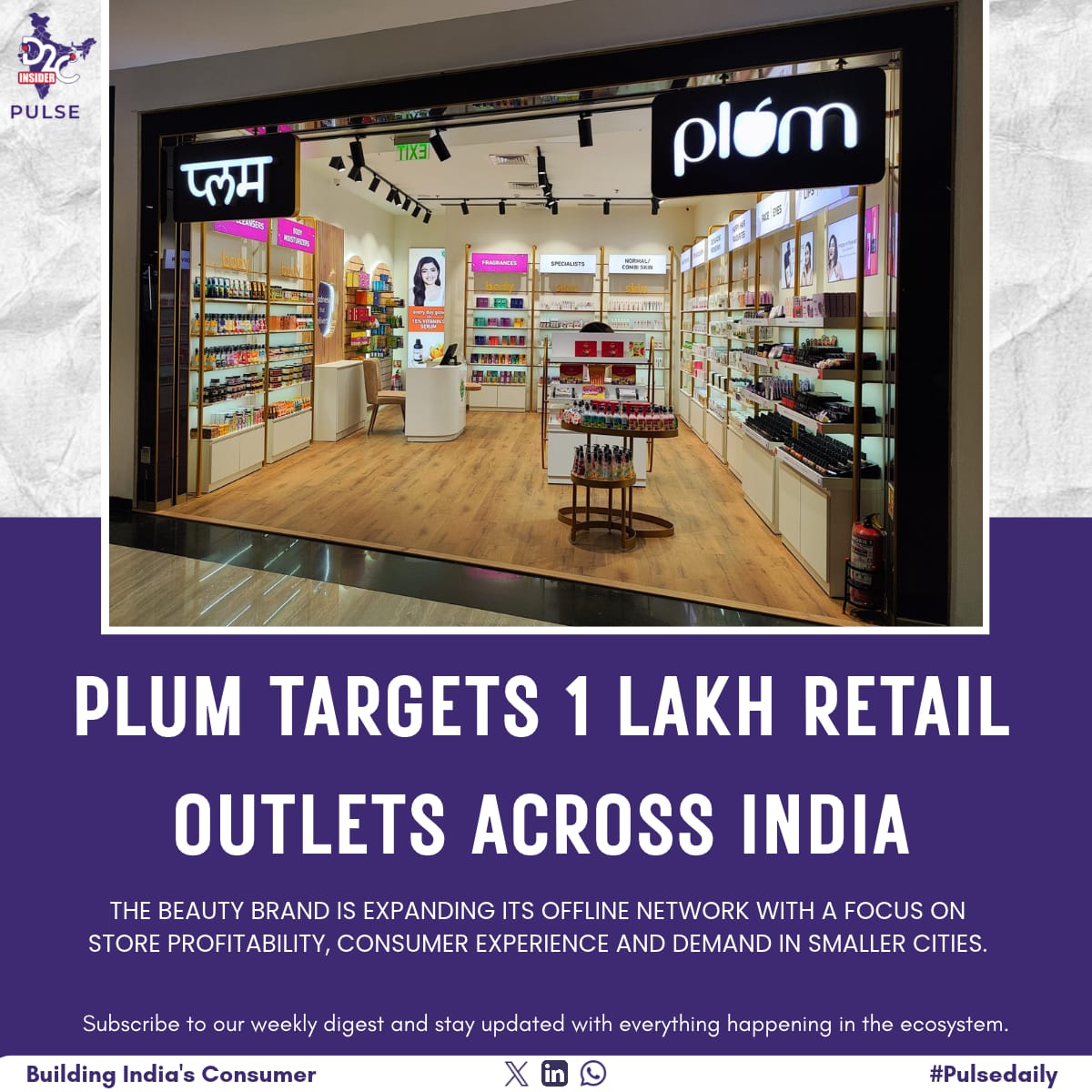
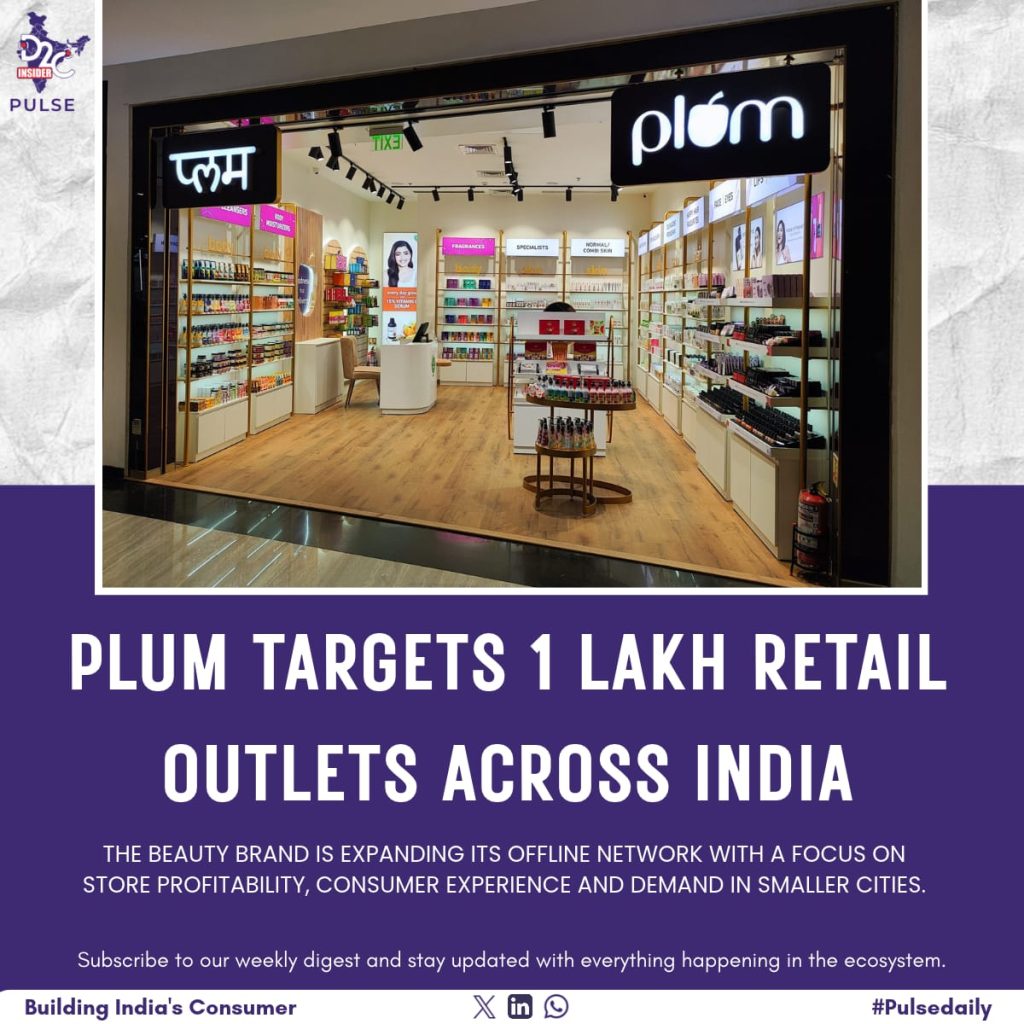
Plum, the beauty and personal care brand founded by Shankar Prasad, is preparing for a significant expansion of its offline network. The company currently has close to 50,000 retail touchpoints across India and is targeting more than one lakh general-trade outlets over the next 12 months.
The strategy reflects how Plum is approaching physical retail as an extension of its digital business rather than a replacement for it. Around 70% of the company’s sales continue to come from online channels, while offline contributes approximately 30%. The mix has remained relatively stable even as both channels have expanded.
Distribution growth requires a different playbook
General trade accounts for the bulk of Plum’s offline presence, supported by neighbourhood cosmetics stores, supermarkets, chemists and other independent retailers. The company also operates through modern trade and has around a dozen exclusive Plum stores.
Its expansion strategy differs across these channels. General trade will drive broader geographical reach, while modern trade expansion will remain selective, focusing on retailers that attract its target beauty and skincare consumers. Exclusive brand stores will be added in locations where sustained local demand can justify the investment.
For Plum, the rationale for entering physical retail is closely linked to changing consumer behaviour. Shoppers increasingly arrive at stores with prior knowledge of products discovered online, influencing what neighbourhood retailers choose to stock.
This makes distribution more than a matter of adding retail partners. Brands must identify where demand already exists, ensure products are consistently available and work with retailers to convert consumer awareness into actual sales.
Store economics matter as much as expansion
Plum’s approach to exclusive stores highlights the financial discipline required in physical retail. According to Prasad, setting up a compact store can require an investment running into tens of lakhs, depending on the location and fit-out. The company generally looks for a payback period of less than a year when evaluating a new location.
The benchmark reflects the importance of store-level economics. Rentals, interiors, employees, inventory and ongoing operating costs can quickly erode profitability if sales do not justify the investment.
This is particularly relevant for beauty brands, where physical stores must offer more than product availability to attract consumers.
The experience advantage of physical retail
For categories such as skincare, consumers often want to experience a product before purchasing it. Online content can explain ingredients and product benefits, but physical stores allow shoppers to test textures, understand application and seek personalised recommendations.
Plum sees product trials and in-store assistance as important tools for converting consumers who may already know a product but remain uncertain about buying it. A tester, for instance, can help a first-time shopper understand the texture of a serum, while an advisor can explain how it fits into an existing skincare routine.
This creates a distinct role for physical retail in an increasingly omnichannel beauty market: building confidence and facilitating product discovery in ways that digital platforms cannot always replicate.
Tier II and III cities drive offline opportunity
Smaller cities are becoming increasingly important to Plum’s distribution strategy. Tier II and III markets together accounted for approximately 70% of the brand’s general-trade sales in Q2 FY26.
The company has seen strong business in Lucknow, consistent growth in Kochi and a sharp pickup in Imphal during the quarter. These markets illustrate why a single expansion strategy may not work across every geography. Consumer preferences, retailer relationships, purchasing power and product demand can differ considerably between cities.
The broader market opportunity is significant. India’s beauty and personal care market was valued at approximately $23 billion in FY25 and is projected to reach $40 billion by 2030, according to estimates cited by Redseer Strategy Consultants. As the category expands, physical distribution will remain important for brands looking to reach consumers beyond the largest urban centres.
Plum itself reported FY26 revenue from operations of ₹515 crore, up 28% year-on-year, and net profit of ₹49 crore. Its financial performance provides a broader picture of a business that is continuing to invest in distribution while building profitability.
The next phase of Plum’s offline expansion will test whether it can translate a wider retail network into stronger consumer access without compromising operational discipline. Reaching one lakh outlets may expand its presence, but the more important measure will be how effectively those outlets generate demand, maintain product availability and contribute to sustainable growth.
For India’s D2C brands, the lesson is becoming increasingly clear: scaling physical retail is not about how many stores carry a product, but how successfully a brand earns a place in consumers’ regular shopping habits.